



Cloud Native & DevOps Services: Transform Your Development & Deployment Process
Organizations are under pressure to deliver software quickly while ensuring reliability. Traditional development methods create delays, but cloud native technologies and DevOps practices provide a solution. Companies using cloud native architectures see faster development cycles and reduced infrastructure costs. They can deploy updates frequently instead of quarterly.
This transition requires skills that many organizations lack. Cloud native development involves new expertise in containers and microservices, while DevOps needs cultural shifts alongside technical changes. Inventiv Cloud helps businesses navigate this transformation with our Cloud Native & DevOps Services, offering strategic consulting and hands-on implementation to modernize infrastructure and automate processes.
Ready to Accelerate Your Digital Transformation?
Our cloud experts design custom solutions that align with your business objectives. Schedule a consultation to discover how cloud native and DevOps practices can transform your operations.
Understanding Cloud Native Application Development
Cloud native represents a fundamental shift in how organizations build and run applications. This approach leverages cloud computing fully rather than simply moving existing applications to cloud infrastructure. As a result, businesses can achieve greater agility and innovation.
The cloud native methodology embraces specific architectural patterns. Applications break into smaller, independent services called microservices. Each service handles a distinct business function and operates autonomously. This modularity allows for faster development and deployment cycles.
Containers package these microservices with their dependencies. This packaging ensures applications run consistently across different environments. Developers build once and deploy anywhere without environment-specific modifications. Consequently, teams can focus on delivering value rather than troubleshooting deployment issues.
Core Principles of Cloud Native Architecture
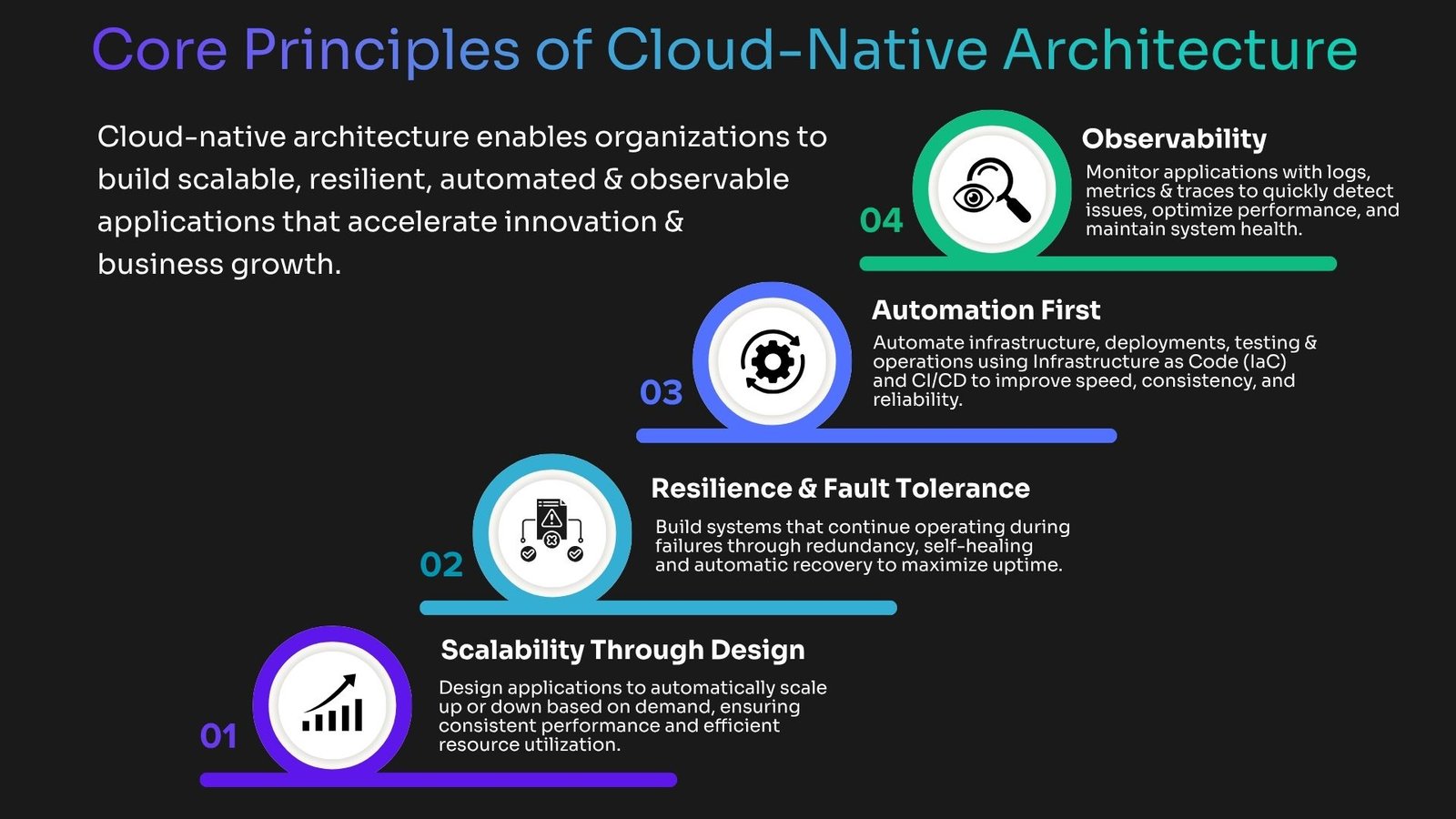
Cloud native architectures follow established principles that maximize cloud benefits. These principles guide teams toward building scalable and resilient systems, ensuring that applications can adapt to changing demands and maintain high availability. By embracing these methodologies, organizations can leverage the full potential of cloud computing, leading to improved efficiency, faster time-to-market, and enhanced customer satisfaction. As teams adopt these principles, they not only enhance their technical capabilities but also foster a culture of innovation and agility within their organizations.
Scalability Through Design
Applications scale horizontally by adding more instances rather than upgrading individual servers. This approach handles variable workloads efficiently. This flexibility allows organizations to respond swiftly to changing demands and optimize resource utilization.
Resilience and Fault Tolerance
Systems expect and handle failures gracefully. Components continue operating when individual services encounter issues. This resilience ensures minimal disruption to overall operations, allowing businesses to maintain continuity.
Automation First
Manual processes give way to automated workflows. Infrastructure provisioning, testing, and deployment happen without human intervention. This shift not only accelerates development cycles but also minimizes the risk of human error.
Observability
Systems provide insights into their internal state through metrics, logs, and traces. Teams understand application behavior in production. This visibility enables proactive optimizations and enhances user satisfaction.
Benefits of Cloud Native Approach
Organizations adopting cloud native practices gain competitive advantages. These benefits extend beyond technology to business outcomes. By enhancing operational efficiency, companies can innovate faster and respond to market changes with agility.
- Development teams can deploy features more rapidly with cloud-native architectures.
- Microservices enable simultaneous development of different components.
- No need to wait for monolithic application releases; updates can be deployed independently.
- Infrastructure costs are reduced through efficient resource utilization.
- Applications automatically scale based on demand, avoiding over-provisioning.
- Cloud services are billed based on actual resource usage.