

Cloud Transformation & Automation:
Modernize with Confidence
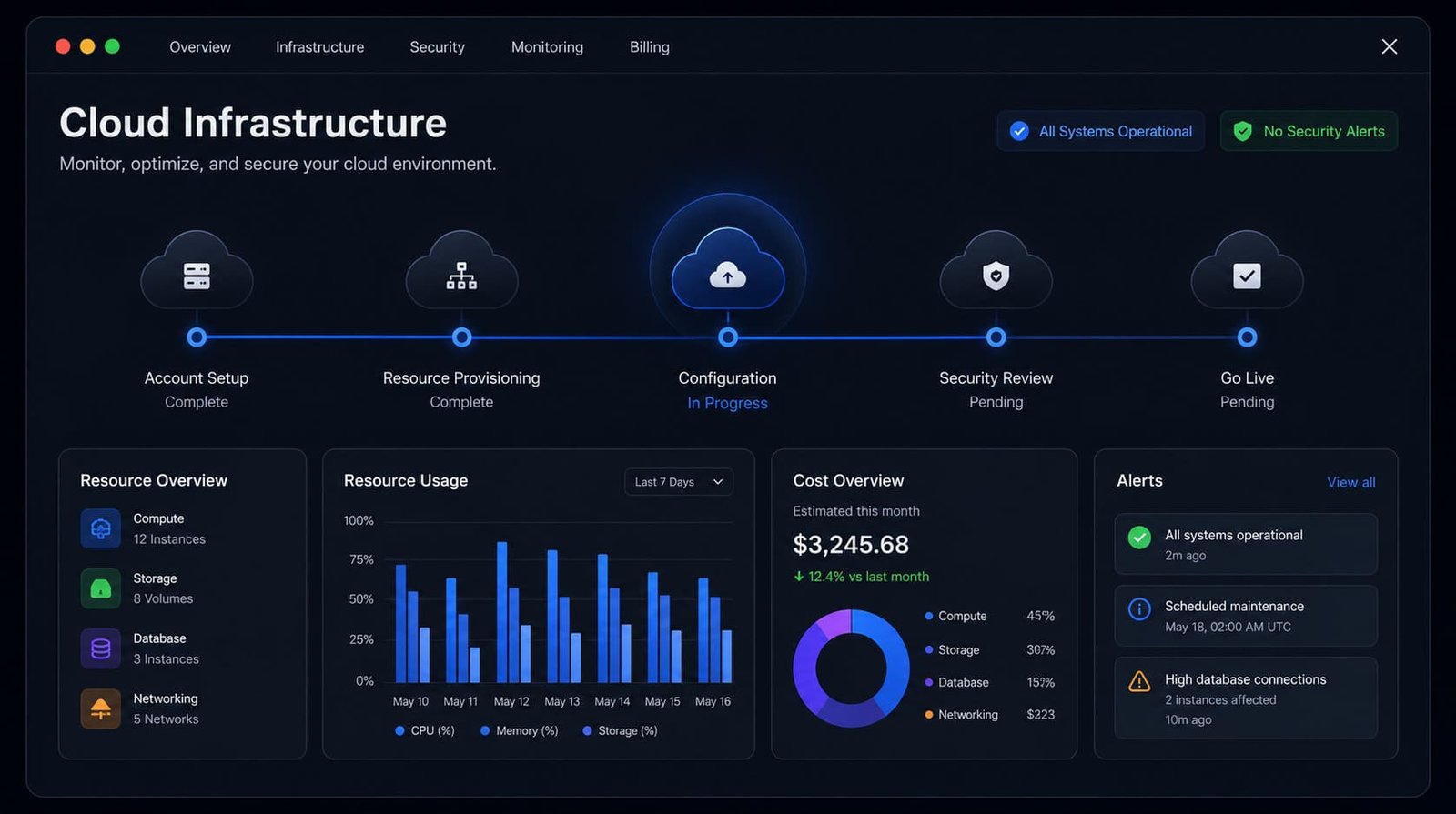
Businesses face mounting pressure to modernize infrastructure and embrace digital innovation. Cloud transformation services provide the strategic roadmap and technical expertise organizations need to migrate from legacy on-premises infrastructure to flexible, scalable cloud solutions. This comprehensive transformation enables companies to reduce costs, enhance security, and accelerate innovation while maintaining business continuity.The cloud transformation journey represents more than simple technology migration. It fundamentally reshapes how organizations operate, deliver customer experience, and compete in rapidly evolving markets. Companies pursuing cloud transformation gain access to cutting-edge tools, improved data security, and the agility needed to respond quickly to changing business objectives.
Successful cloud transformation initiatives require a strategic roadmap that goes beyond simply moving workloads to the cloud. Organizations must align cloud adoption with core business objectives, ensuring every technology decision supports long-term growth and innovation. This holistic approach to digital transformation empowers businesses to streamline operations, enhance customer engagement, and unlock new revenue opportunities through data-driven insights.
Ready to Start Your Cloud Transformation Journey?
We tailor our cloud consulting approach to your unique business requirements, industry regulations, and long-term growth objectives. With continuous performance monitoring and proactive support, we help you adapt to evolving technology landscapes while maintaining operational efficiency and a strong competitive advantage.
What Is Cloud Transformation?
Cloud transformation encompasses the comprehensive process of migrating business operations, applications, and data from traditional on-premises infrastructure to cloud computing environments. This strategic initiative goes beyond simple technology replacement. Organizations undertake cloud transformation to fundamentally reimagine how they deliver services, manage resources, and drive innovation.
The transformation cloud approach involves multiple interconnected components. Companies must evaluate existing infrastructure, develop migration strategies, redesign applications for cloud environments, and establish new operational processes. Successful cloud transformation requires careful planning, technical expertise, and change management to ensure business continuity throughout the journey.
Why Cloud Transformation Matters ?
- Strategic Business Benefits: Cloud transformation delivers substantial advantages that directly impact organizational performance and competitive positioning. Businesses gain enhanced scalability and operational agility, allowing them to respond swiftly to market shifts and evolving customer demands. These benefits translate into measurable outcomes and improved system reliability.
- Technical Infrastructure Advantages: Modern cloud computing platforms provide technical capabilities impossible with legacy infrastructure cloud deployments. Advanced features such as elastic scalability, serverless architectures, and AI-powered analytics enable organizations to innovate at a pace unattainable with traditional on-premises systems.
- Operational Efficiency Gains: Organizations modernizing business operations through cloud transformation achieve significant efficiency improvements across departments. By automating manual processes and integrating cloud-based collaboration tools, teams can eliminate redundancies and accelerate workflow execution across the enterprise.
- Data and Analytics Capabilities: Cloud platforms unlock powerful data processing and analytics tools previously unavailable to most organizations. With access to scalable big data solutions, real-time analytics, and machine learning capabilities, businesses can transform raw data into actionable insights faster than ever before.
Essential Components of Cloud Transformation Strategy
A comprehensive cloud transformation strategy requires careful consideration of multiple technical and organizational elements. Organizations must align technology decisions with business objectives while addressing security compliance, cost management, and operational requirements. The right cloud transformation approach balances immediate migration needs with long-term strategic goals.
Infrastructure Assessment and Planning
Successful transformation begins with thorough evaluation of existing on-premises infrastructure. Organizations must inventory applications, assess dependencies, identify integration requirements, and classify workloads based on cloud suitability. This assessment phase establishes the foundation for informed migration decisions and realistic timeline development.
Technical teams analyze application architectures, data flows, performance requirements, and security constraints. Understanding these technical requirements prevents costly mistakes during cloud migration execution.Following the assessment phase, organizations must develop a comprehensive cloud migration strategy that prioritizes workloads based on business impact and technical complexity. This involves selecting appropriate migration approaches, such as rehosting, replatforming, or refactoring, based on each application’s specific requirements.


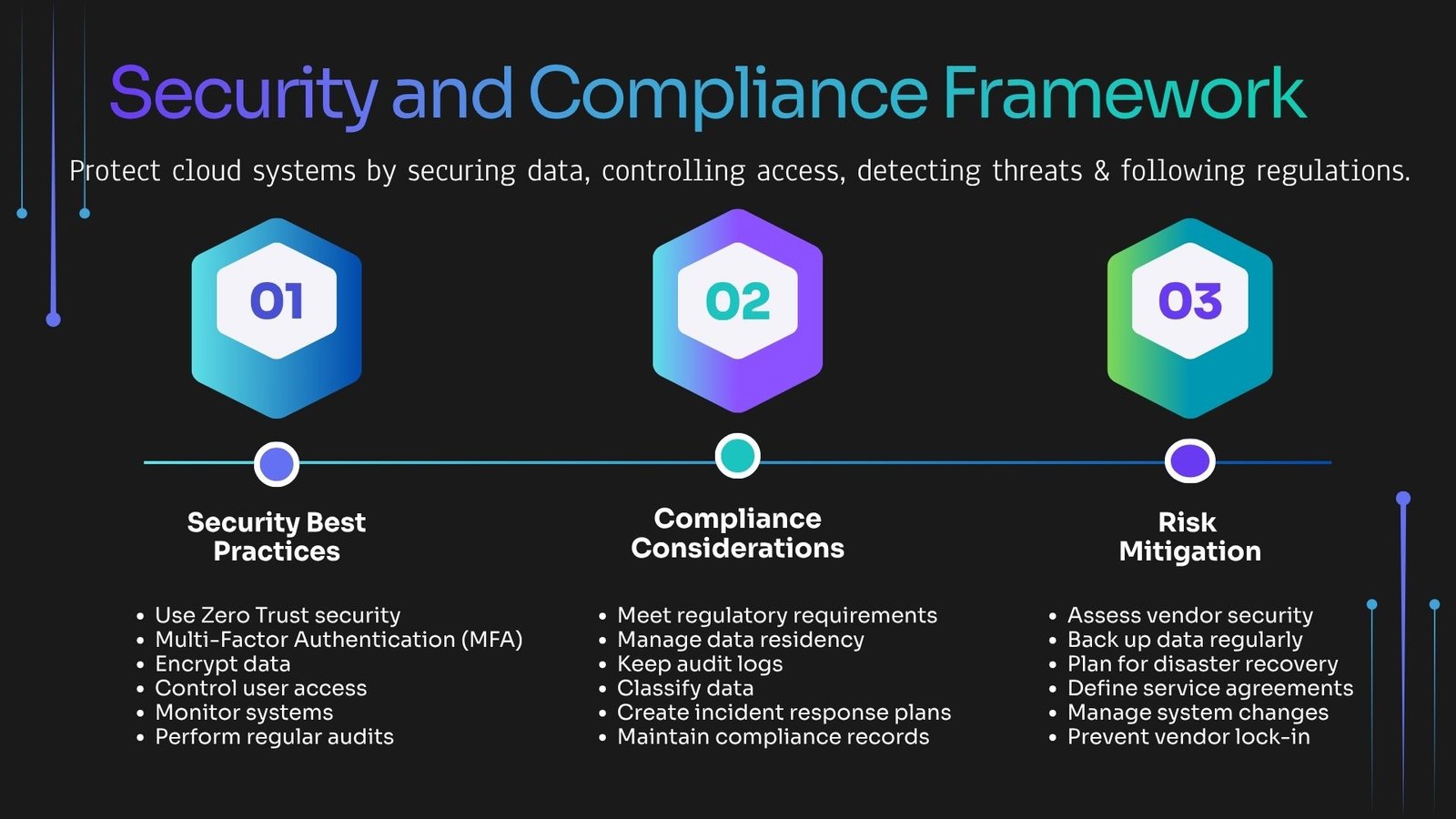
Security and Compliance Framework
Data security remains paramount throughout the cloud transformation journey. Organizations must establish robust security frameworks addressing data protection, access management, threat detection, and regulatory compliance. Cloud security requires different approaches than traditional on-premises models, emphasizing identity management and data encryption.Security compliance requirements vary by industry, geography, and data types.
Healthcare organizations must address HIPAA regulations, financial institutions navigate PCI-DSS requirements, and global companies manage GDPR obligations. The transformation strategy must explicitly address how cloud solutions maintain or improve security compliance posture.Organizations must partner with cloud consultants who possess deep expertise in industry-specific compliance frameworks and regulatory standards.
Application Modernization Approach
Legacy applications often require modification to fully leverage cloud capabilities. Organizations choose from several modernization strategies including rehosting, replatforming, refactoring, or complete rebuilding. Each approach offers different benefits, costs, and complexity levels. The optimal strategy depends on application criticality, technical debt, and business requirements.Containerization and microservices architectures enable greater flexibility and scalability. Applications redesigned for cloud environments benefit from automatic scaling, improved resilience, and easier management.
Adopting containerization technologies such as Docker and orchestration platforms like Kubernetes allows organizations to package applications consistently across development, testing, and production environments. This microservices approach breaks down monolithic applications into independently deployable components.

Cloud Migration: Step-by-Step Implementation Process
Cloud migration transforms theoretical transformation strategy into practical reality. Organizations must follow structured processes ensuring successful application transfer, data integrity, and minimal business disruption. The migration process involves technical execution, testing, validation, and optimization phases that collectively deliver working cloud solutions.
Successful cloud migration requires meticulous planning and execution across multiple critical phases, from initial data transfer to final system validation. Organizations must implement robust testing protocols to verify application functionality, data accuracy, and performance benchmarks before decommissioning legacy systems. Throughout the migration process, cloud migration specialists monitor key performance indicators and address any technical issues in real time, ensuring a seamless transition with minimal downtime.
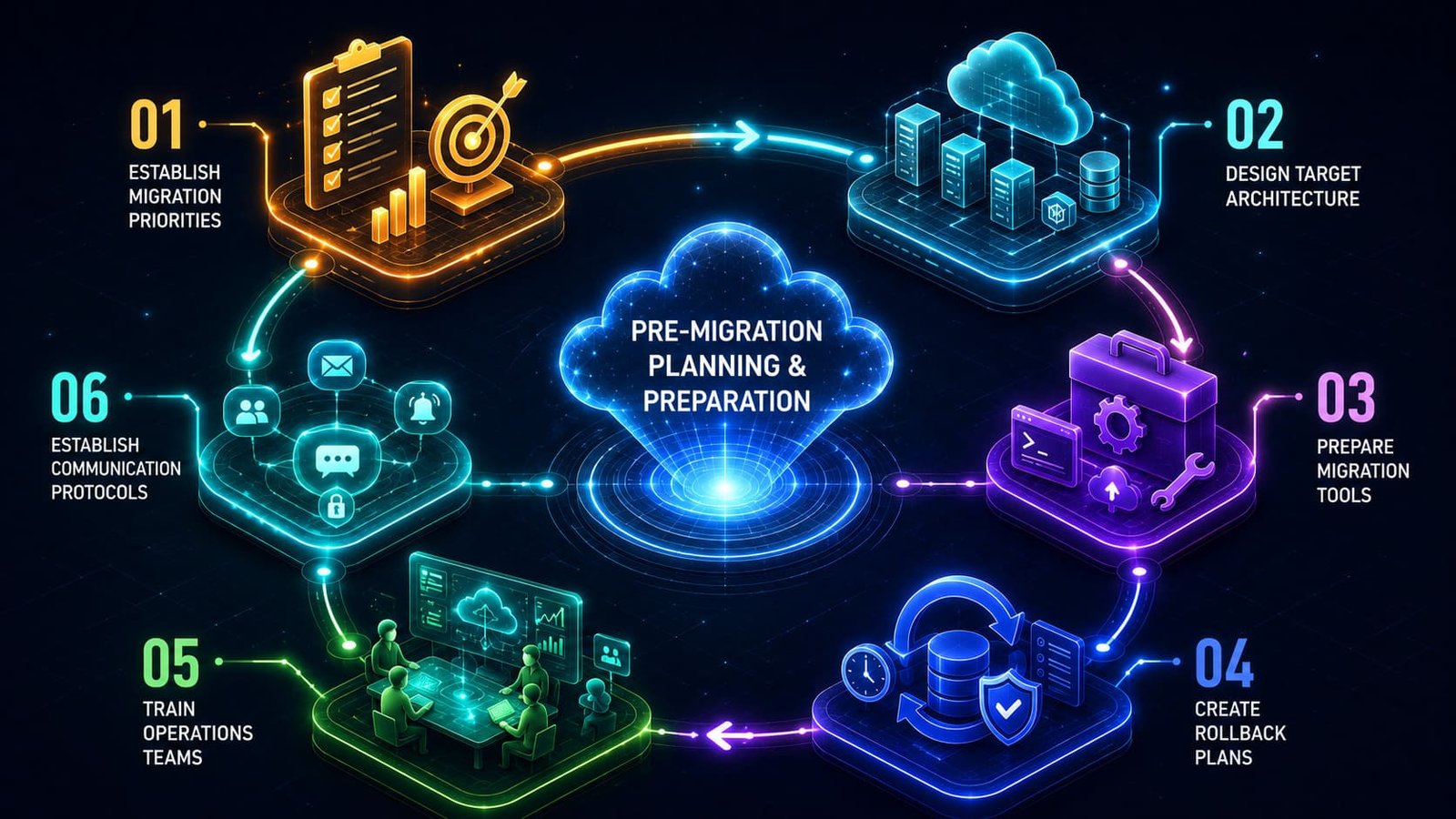
Effective cloud migration begins long before moving first workloads. Teams must establish clear objectives, define success metrics, allocate resources, and create detailed migration plans. Proper preparation reduces risks, prevents unexpected challenges, and establishes realistic expectations for stakeholders throughout organizations.A well-structured cloud migration plan also requires identifying key stakeholders, establishing clear communication channels, and assigning ownership for each phase of the transition. Organizations should conduct thorough risk assessments to anticipate potential technical, operational, or compliance challenges before they arise.
Execution and Data Transfer
The migration execution phase moves applications and data from on-premises infrastructure to cloud platforms. Organizations typically adopt phased approaches, migrating workloads incrementally rather than attempting simultaneous transfer. This measured approach allows teams to learn, adjust processes, and minimize risk exposure during transformation.Data migration represents one of the most challenging aspects of cloud transformation. Large data volumes require careful transfer planning, bandwidth management, and integrity validation.
Organizations must maintain data security throughout transfer processes while ensuring business systems remain accessible. Many companies employ hybrid approaches, maintaining partial on-premises presence during extended migration periods.Organizations must maintain data security throughout transfer processes while ensuring business systems remain accessible.


Testing, Validation and Optimization
Comprehensive testing ensures migrated applications function correctly in new cloud environments. Teams verify performance meets requirements, security controls operate effectively, and integrations maintain proper functionality. Testing phases identify issues before production deployment, preventing costly problems affecting business operations or customer experience.Post-migration optimization fine-tunes cloud resources for cost efficiency and performance.
Organizations adjust compute capacity, optimize storage configurations, and implement automation reducing management overhead. This ongoing process often includes rightsizing underutilized instances and leveraging cost management tools to identify additional savings opportunities across cloud environments. Continuous optimization ensures businesses extract maximum value from cloud investments while maintaining security and performance standards.
Measuring Cloud Transformation Success and ROI
Effective measurement demonstrates cloud transformation value, guides optimization efforts, and justifies continued investment. Organizations must establish relevant metrics before beginning transformation, track progress consistently, and analyze results identifying improvement opportunities. Comprehensive measurement encompasses technical performance, financial outcomes, and business impact.
Key Performance Indicators and Metrics
Cloud transformation success requires tracking multiple KPI categories measuring different aspects of transformation impact. Technical metrics assess infrastructure performance, availability, and resource utilization. Financial metrics evaluate cost savings, ROI, and total cost of ownership. Business metrics measure impacts on customer experience, operational efficiency, and innovation velocity.
Continuous Optimization and Improvement
Cloud transformation is an ongoing journey that requires organizations to continuously optimize their configurations and processes based on performance data and evolving business needs. By establishing cloud centers of excellence, businesses can promote best practices, share knowledge, and drive improvements, ensuring they maximize their cloud investments while staying agile in a changing market.
Business Benefits and ROI of Cloud Transformation
Organizations investing in cloud transformation realize substantial benefits extending beyond technology improvements. Successful cloud adoption impacts financial performance, operational efficiency, competitive positioning, and innovation capabilities. Understanding these benefits helps businesses build compelling cases for transformation initiatives and set appropriate success metrics.
These advantages manifest across multiple dimensions of business performance, from reduced capital expenditure and improved cash flow to enhanced customer satisfaction and faster product innovation. Organizations that successfully navigate cloud transformation often report measurable improvements in employee productivity and cross-departmental collaboration, driven by access to modern, cloud-based tools and platforms.
Cost Optimization and Financial Benefits
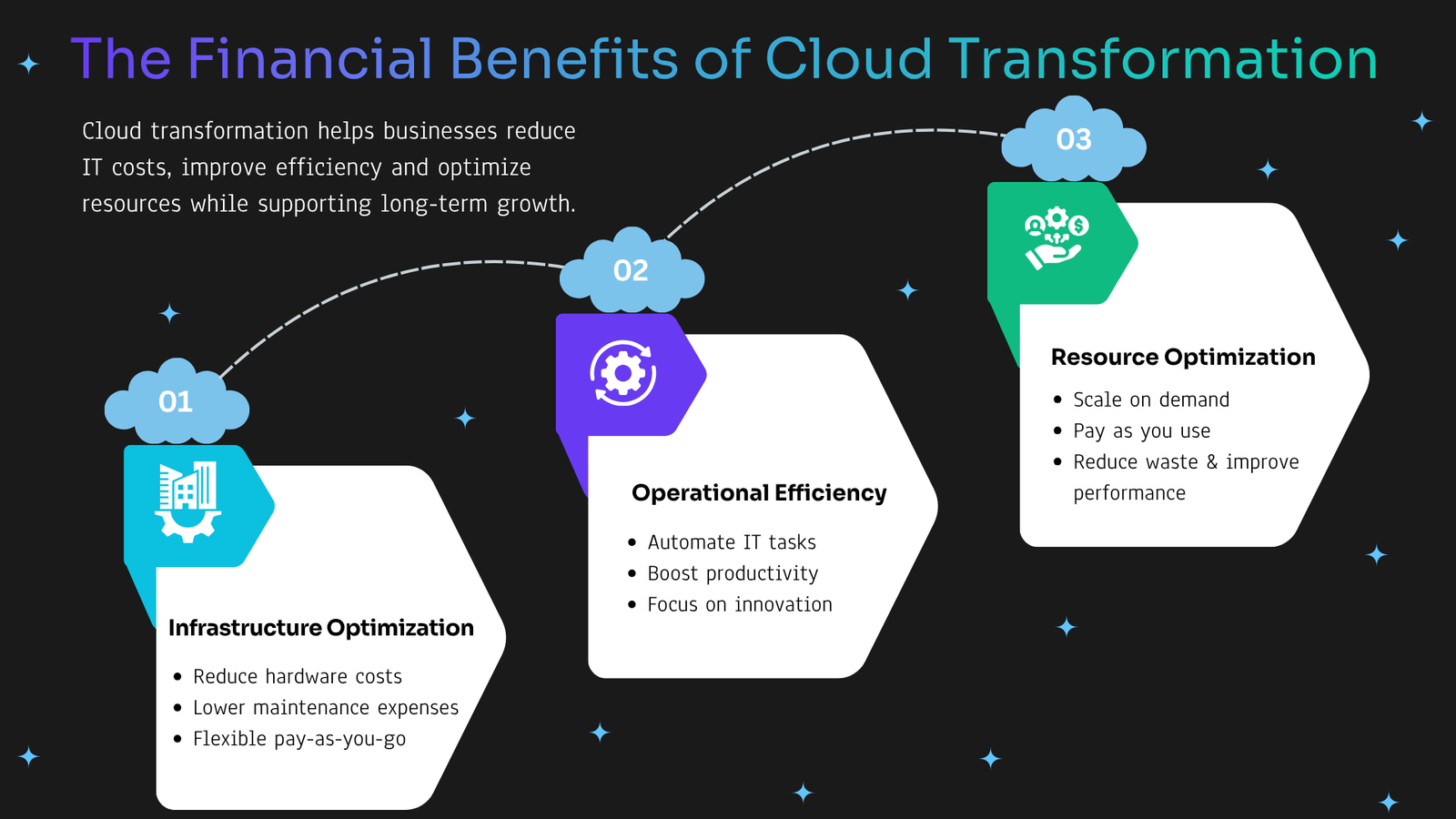
Cloud transformation enables organizations to reduce costs through multiple mechanisms. Companies eliminate capital expenditures on hardware, reduce data center operational expenses, and optimize resource consumption through pay-as-you-go models. These financial benefits directly improve bottom-line performance while freeing capital for strategic investments in innovation and growth.
Enhanced Security and Compliance
Top cloud providers invest heavily in security and compliance, offering better data protection than on-premises solutions. They deliver advanced security tools, continuous monitoring, and automated threat responses. Compliance is simplified with built-in controls and certifications, benefiting businesses across jurisdictions by reducing burdens and enhancing security posture.
Improved Agility and Innovation
Cloud transformation speeds up innovation by granting quick access to advanced technologies and resources. Organizations can rapidly test new ideas and adapt to market changes, gaining a competitive edge. Development teams utilize cloud solutions for faster integration and deployment, allowing them to gather feedback and refine solutions in days instead of weeks or months.
Common Challenges and Best Practices for Successful Transformation
Cloud transformation presents significant challenges requiring careful management and strategic planning. Organizations encounter technical obstacles, organizational resistance, skill gaps, and cost overruns during transformation journeys. Understanding common challenges and proven best practices helps businesses navigate transformation successfully while avoiding costly mistakes.
Technical & Architectural Challenges

Legacy applications often face compatibility issues in cloud environments, leading to struggles with dependencies and performance during migration. Addressing these challenges requires expertise, careful planning, and sometimes redesign.
Organizational & Change Management

Successful cloud transformation necessitates organizational change beyond technology, requiring staff to adapt to new processes and tools. Strong leadership is essential for establishing vision and ensuring commitment, as without it, transformation efforts may falter.
Cost Management & Optimization

Unexpected costs are common in cloud transformation. Organizations face challenges with pricing models & resource management. Without proper oversight, costs can rise rapidly, diminishing financial gains. Ongoing cost management & accountability are essential.
Developing Your Cloud Transformation Strategy
A comprehensive cloud transformation strategy aligns technology decisions with business objectives while addressing organizational capabilities and constraints. Effective strategies consider current state, desired outcomes, available resources, and realistic timelines. Strategic planning establishes foundation for successful transformation delivering measurable business value.
Business Alignment and Objective Setting
Cloud transformation strategy focuses on clear business objectives and stakeholder engagement to drive successful outcomes.
- Define Objectives: Set clear, measurable goals for cloud transformation.
- Assess Current State: Review existing infrastructure and identify improvement areas.
- Choose Cloud Model: Select the best deployment strategy (public, private, hybrid, multi-cloud).
- Develop Roadmap: Plan phased implementation with prioritized applications and timelines.
- Establish Governance: Create policies for security, compliance, and cost management.
- Manage Change: Implement training and communication strategies for smooth adaptation.


Technology Selection and Architecture Design
Choosing cloud solutions involves assessing providers and architectures to meet specific business needs efficiently.Selecting the right cloud provider requires careful evaluation of factors such as pricing models, service reliability, geographic availability, and compatibility with existing systems. Organizations must also consider architectural approaches, including public, private, or hybrid cloud deployments, to determine which model best supports their performance, security, and compliance requirements.
- Public Cloud Benefits: Public cloud platforms provide scalability, extensive services, and cost-effective pricing for dynamic workloads.
- Private Cloud Advantages: Private clouds offer dedicated resources and enhanced security tailored for sensitive data and compliance.
- Hybrid Cloud Flexibility: Hybrid solutions blend public and private clouds, allowing optimal workload distribution based on needs.
Industry-Specific Cloud Transformation Applications
Cloud transformation delivers unique benefits across different industries, each leveraging cloud computing capabilities to address specific business challenges and opportunities. Understanding industry-specific applications helps organizations identify relevant use cases, benchmark against peers, and develop transformation strategies aligned with sector requirements.
Healthcare and Life Sciences
Healthcare organizations are increasingly utilizing cloud transformation to enhance patient care, ensure data security, and expedite medical research. This shift allows for secure sharing of medical records, supports telemedicine, and offers computational power for genomic studies, all while adhering to HIPAA regulations.Cloud transformation in healthcare enables organizations to modernize electronic health record systems while maintaining strict HIPAA compliance and robust data encryption standards.
- Improved patient care through innovative cloud solutions.
- Enhanced data security and privacy compliance.
- Accelerated medical research with cloud computing capabilities.
- Facilitated collaboration and data processing in medical research.
- Support for personalized medicine and population health analytics.


Financial Services and Banking
Financial institutions are increasingly leveraging cloud transformation to enhance customer experiences, manage risks effectively, and drive innovation in product offerings. This shift enables mobile banking applications, real-time fraud detection, and advanced analytics for market insights, all while navigating strict regulatory landscapes.
- Cloud solutions improve customer experience and streamline operations.
- Real-time fraud detection enhances security measures.
- Investment firms utilize cloud for high-performance computing and risk modeling.
- Cloud platforms support rapid transaction processing and market analysis.
- Organizations can quickly adapt to market changes while ensuring compliance.
Retail and E-Commerce
Retail organizations are revolutionizing customer interactions through cloud technology. By leveraging cloud capabilities, they can enhance personalization, streamline omnichannel commerce, and optimize supply chains. This transformation allows for effective management of seasonal demand without excessive infrastructure costs.
- Real-time inventory management for better stock control.
- Personalized product recommendations to improve customer engagement.
- Seamless shopping experiences across online and physical channels.
- Support for millions of simultaneous users on e-commerce platforms.
- Secure transaction processing and global content delivery.
- Advanced analytics and reporting for data-driven business decisions.
- Scalable cloud infrastructure that adapts to seasonal demand spikes.
- AI-powered fraud detection to safeguard payment security.

Future Trends in Cloud Transformation
Cloud transformation continues evolving as new technologies emerge and business requirements change. Organizations must stay informed about trends shaping cloud computing future, enabling proactive strategy adjustments and competitive positioning. Understanding emerging trends helps businesses prepare infrastructure, develop capabilities, and capitalize on new opportunities.Cloud transformation continues evolving as new technologies emerge and business requirements change. Organizations must stay informed about trends shaping cloud computing future, enabling proactive strategy adjustments and competitive positioning.
Emerging Technologies and Innovations
Integration of artificial intelligence and machine learning is revolutionizing cloud capabilities by enabling automation and analytics, making advanced technologies more accessible. Additionally, edge computing brings cloud resources closer to data sources, facilitating real-time processing for IoT and other applications, thus enhancing performance through a hybrid infrastructure that meets modern demands.
Key Future Trends
- Serverless computing adoption is accelerating development speed significantly and efficiently.
- Multi-cloud strategies are becoming the standard approach for modern enterprises today.
- Sustainability focus is driving numerous green cloud initiatives across various industries.
- Quantum computing cloud services are emerging as a game-changing technology trend.
- Enhanced security through AI-powered threat detection systems is vital for organizations.
- Industry-specific cloud solutions are proliferating rapidly, addressing unique business needs.
- Low-code platforms are democratizing application development for non-technical users significantly.