

Cloud Infrastructure:
Powering Business Transformation
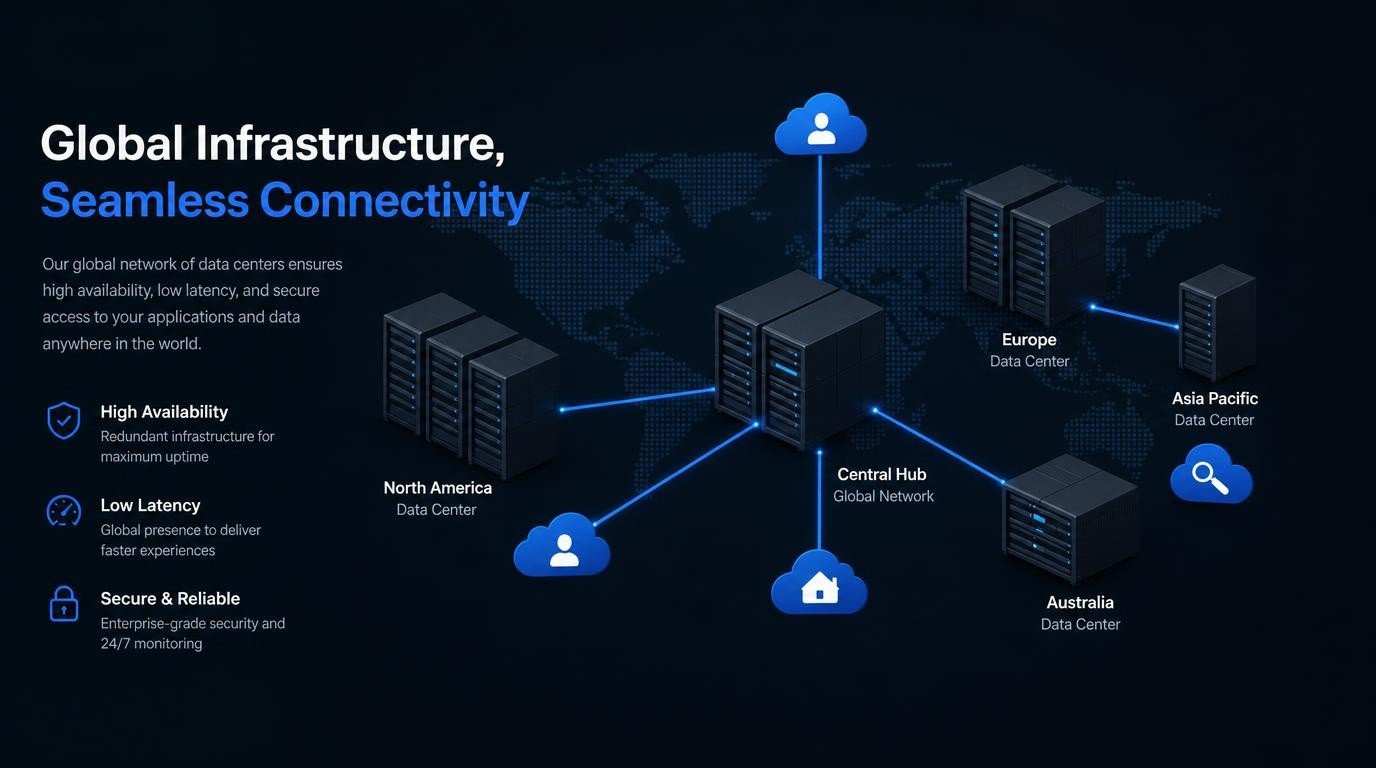
Digital transformation demands infrastructure that adapts instantly. Cloud infrastructure delivers computing power, storage capacity, and network resources through internet connectivity. Businesses no longer invest heavily in physical hardware, allowing them to focus on innovation and growth.This approach revolutionizes operations. Companies scale resources based on current demand. They pay only for services used during specific periods, optimizing their budgets and improving financial agility.Organizations worldwide migrate critical workloads to cloud environments. The shift creates competitive advantages through enhanced flexibility and reduced operational costs, enabling faster response to market changes.
Ready to Transform Your Infrastructure?
Discover how Inventiv Cloud can modernize your business operations with scalable, secure cloud infrastructure solutions tailored to your specific requirements. Our expert team is dedicated to ensuring seamless integration and optimal performance for your unique needs.From strategic planning to ongoing support, we help organizations accelerate digital transformation.
Understanding Cloud Infrastructure Components
Cloud strategy consulting provides organizations with expert guidance to navigate digital transformation. This service encompasses planning, implementation, and optimization of cloud infrastructure to meet specific business objectives. By leveraging cloud technology, businesses can achieve improved operational efficiency, reduce costs, and enhance data security. Additionally, strategic cloud consulting fosters innovation, enabling organizations to respond swiftly to market changes and customer demands.
This service is essential for organizations aiming to balance agility with risk management, ensuring they remain competitive in a rapidly evolving digital landscape. Strategic cloud consulting addresses critical business needs. Organizations require frameworks that balance innovation with security, flexibility with control, and speed with stability.
Core Hardware Components
Physical servers form the foundation of cloud infrastructure. Data centers house thousands of interconnected machines. These facilities maintain optimal temperature and power conditions. Additionally, virtualization technologies allow multiple virtual machines to run on a single physical server, maximizing resource utilization and flexibility.
Storage devices retain massive amounts of information. Modern data centers use high-speed solid-state drives. Traditional hard disk drives handle archival data. Moreover, implementing tiered storage solutions can enhance performance and cost-efficiency by categorizing data based on access frequency.
Network equipment connects all infrastructure elements. Routers direct traffic between servers. Switches manage data flow within facilities. Security measures, such as firewalls and intrusion detection systems, are also critical to protect the network and ensure data integrity.


Essential Software Components
Virtualization technology allows physical servers to run multiple virtual machines independently. Hypervisors oversee resource distribution among these environments. This foundational technology enables organizations to maximize hardware utilization and support the scalability required for modern cloud computing environments.
Management software automates cloud operations, ensuring efficient resource use. Security software safeguards data and applications through firewalls and encryption.
- Compute resources provide processing power for applications
- Storage systems retain data across distributed locations
- Networking infrastructure enables seamless communication
- Virtualization platforms create isolated environments
- Management tools automate operations and monitoring.
Types of Cloud Infrastructure Deployment Models
Organizations choose deployment models based on specific requirements. Each model offers distinct advantages for different use cases. Understanding these options guides strategic decisions. Selecting the right model can significantly impact performance and cost. It also influences scalability and security measures. As businesses evolve, revisiting these choices ensures alignment with changing needs.
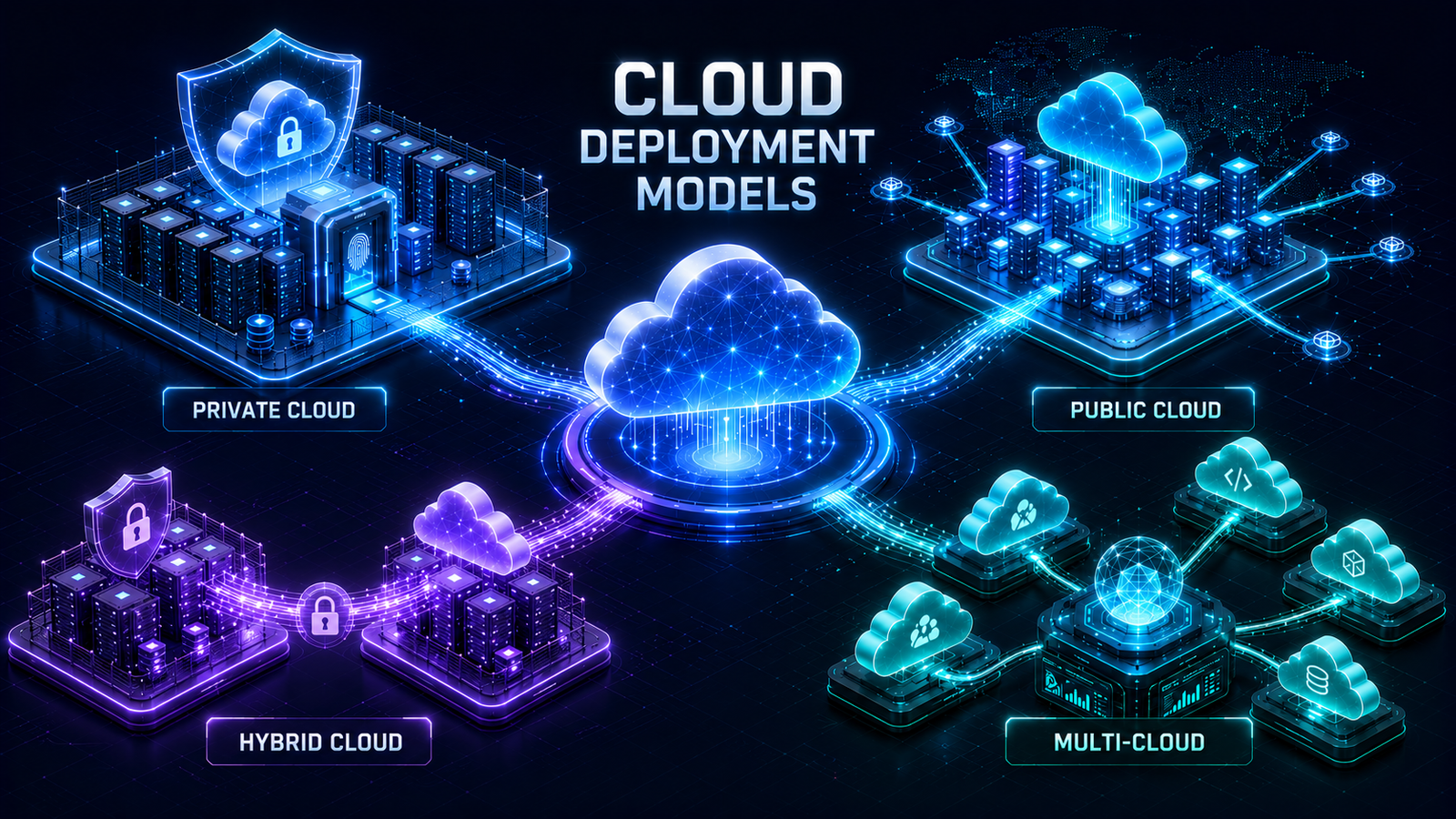
Public cloud deployments offer cost-effective scalability ideal for businesses with variable workloads, while private cloud solutions provide enhanced control and security for organizations managing sensitive data or strict regulatory requirements. Hybrid and multi-cloud models further enable businesses to balance performance, compliance, and flexibility by combining resources across multiple environments.
Public Cloud Infrastructure
Public cloud services share resources among multiple customers. Major cloud providers operate massive data centers globally. Amazon Web Services, Microsoft Azure, and Google Cloud dominate this market.
This model offers maximum scalability. Organizations access virtually unlimited computing power. Providers handle all maintenance and infrastructure updates. Cost efficiency attracts many businesses. Companies avoid capital expenditure on hardware. They pay only for consumed resources each billing period.
- High availability ensures resources are accessible at all times.
- Flexible pricing models cater to varying business needs.
- Rapid deployment allows for quick scaling of resources.
- Access to advanced technologies without significant investment.


Private Cloud Infrastructure
Private cloud environments serve single organizations exclusively. These deployments provide enhanced control over infrastructure. Companies maintain dedicated resources for their workloads.
Security considerations often drive private cloud adoption. Sensitive data remains within controlled environments. Organizations enforce customized security policies across infrastructure. Compliance requirements necessitate private deployments. Regulated industries maintain data sovereignty. Healthcare and financial sectors frequently choose this model.
- Improved performance with dedicated resources
- Greater control over data and applications
- Enhanced security protocols tailored to organizational needs
- Ability to customize infrastructure to meet specific requirements
- Compliance with industry regulations and standards
Hybrid Cloud Infrastructure
Hybrid cloud combines public and private environments. Organizations distribute workloads strategically across platforms. This approach optimizes cost and performance simultaneously.
Sensitive applications run in private clouds. Less critical workloads utilize public cloud resources. Data moves seamlessly between environments when needed. Flexibility defines hybrid cloud advantages. Companies scale public cloud usage during peak periods. They maintain core systems in private infrastructure permanently.
- Cost efficiency through optimized resource allocation.
- Improved security for sensitive data in private environments.
- Scalability to meet varying workload demands.
- Enhanced disaster recovery options across multiple platforms.
- Greater control over data management and compliance.

Multi-Cloud Infrastructure
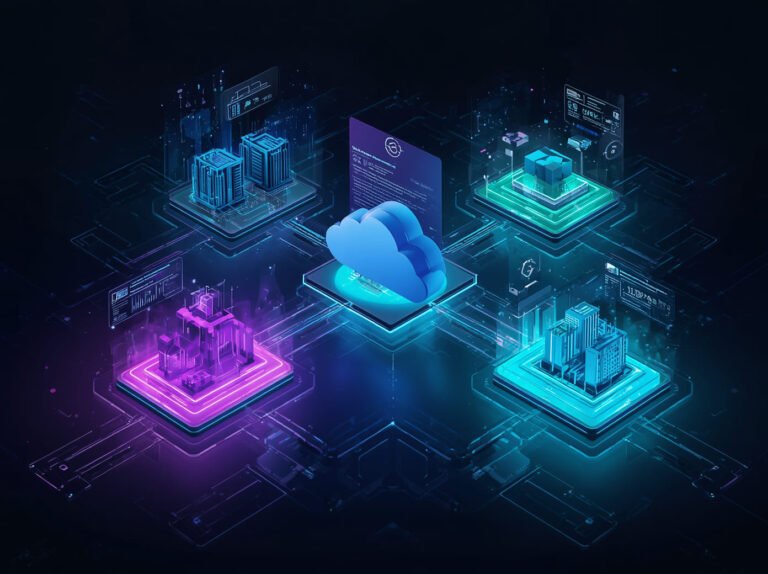
Multi-cloud strategies utilize multiple cloud providers simultaneously. Organizations avoid vendor lock-in risks. They leverage best-in-class services from different platforms.
Redundancy improves disaster recovery capabilities. Applications failover between cloud providers automatically. This architecture ensures continuous business operations. Cost optimization drives multi-cloud adoption. Companies compare pricing across providers. They place workloads where costs remain lowest.
- Increased flexibility in choosing services
- Enhanced resilience through diverse provider options
- Ability to optimize performance based on workload needs
- Improved negotiation leverage with providers
- Facilitated innovation by integrating various technologies
Key Cloud Infrastructure Services and Solutions
Cloud infrastructure encompasses multiple service categories. Each service type addresses specific business needs. Understanding these offerings helps organizations build effective solutions. By carefully selecting the right services, businesses can enhance operational efficiency and drive innovation. Tailoring cloud solutions to specific requirements ensures optimal performance and resource utilization. This strategic approach allows organizations to stay competitive in a rapidly evolving digital landscape.
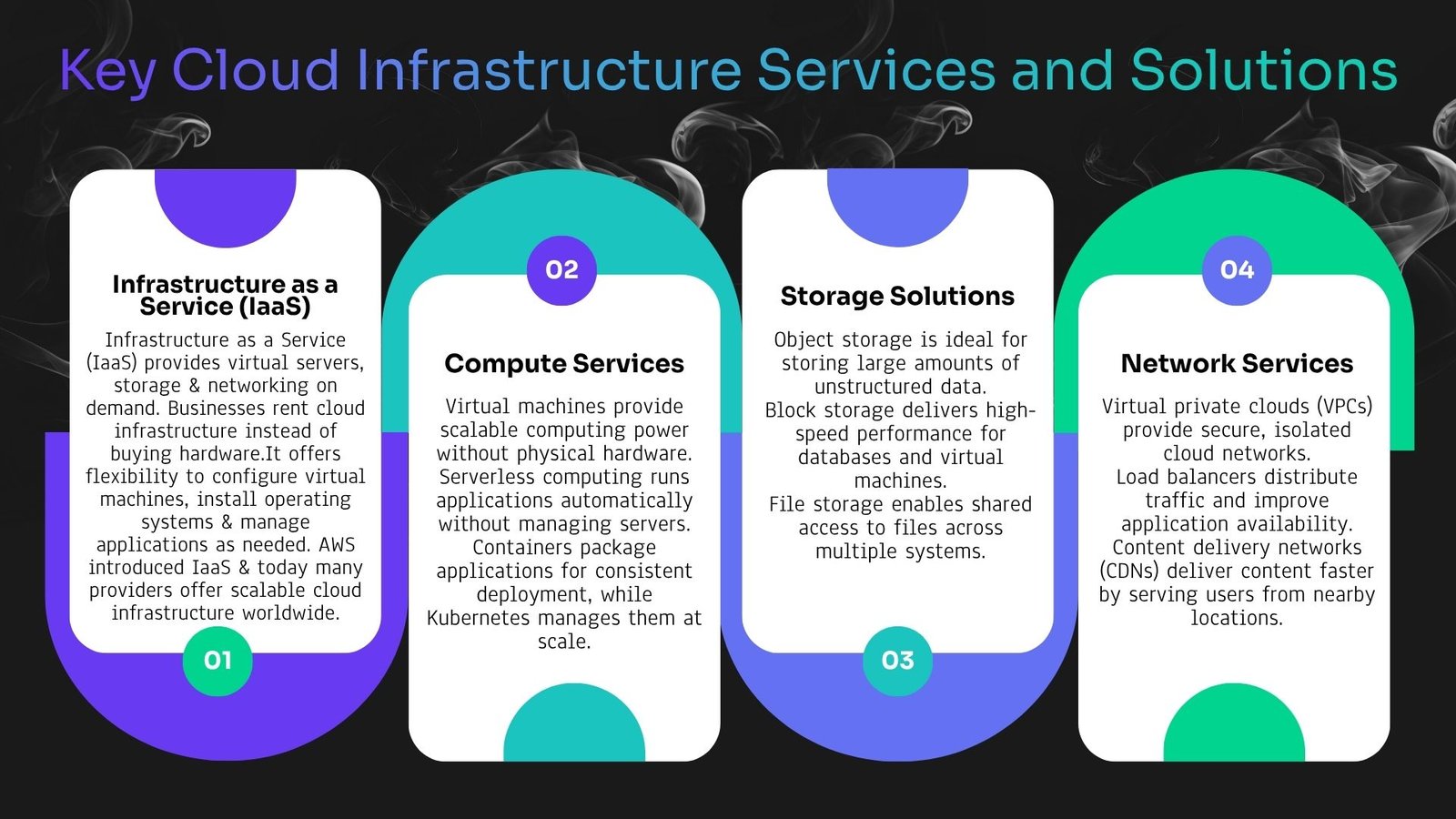
- Infrastructure as a Service: IaaS enables organizations to rent virtual machines & storage, providing flexibility & scalability in cloud computing.
- Compute Services: Virtual machines, serverless computing, and container services provide flexible, scalable computing solutions for organizations.
- Storage Solutions: Object, block, and file storage solutions efficiently manage data with scalable access and low latency.
Network Services: Virtual private clouds secure networks, load balancers optimize traffic, and content delivery networks enhance access speed.
Cloud Computing Benefits for Business Operations
Cloud infrastructure transforms how organizations operate. Benefits extend beyond simple cost savings. Strategic advantages drive competitive differentiation in markets. Furthermore, it fosters innovation by enabling teams to collaborate seamlessly across geographies. The agility offered by cloud solutions empowers businesses to respond swiftly to market changes.
Scalability and Flexibility

Cloud resources automatically adjust to demand, allowing applications to manage traffic surges efficiently. Organizations incur costs based solely on their actual usage. Both vertical and horizontal scaling enhance resource capabilities swiftly, often within minutes. This rapid provisioning enables development teams to create and test environments dynamically, significantly speeding up software development processes.
Cost Optimization

Capital expenditure shifts to operational expenses, allowing companies to bypass hefty hardware costs and benefit from predictable monthly billing. Reserved instances yield discounts for long-term commitments, while spot instances enhance savings for adaptable workloads. Additionally, resource optimization curtails waste by shutting down unused instances during off-hours and aligning capacity with actual needs.
Business Agility

New markets open without infrastructure delays, allowing for rapid global expansion through cloud providers and regional data centers that cater to local users. This fosters innovation, as resources are instantly available for experiments, minimizing costs for failed initiatives. Consequently, the time to market decreases significantly, enabling applications to deploy globally within hours and ensuring updates reach users immediately after completion.
Cloud Infrastructure Security and Compliance
Security remains paramount in cloud infrastructure deployment. Organizations must protect data across distributed environments. Comprehensive security strategies address multiple threat vectors simultaneously. Regular security assessments and updates are essential to adapt to evolving threats. By fostering a culture of security awareness, organizations can empower their teams to identify and mitigate risks effectively.
Identity and Access Management
Identity access management determines resource access. Authentication confirms user identities, while multi-factor authentication adds security. Role-based access control ensures users have only necessary permissions, reducing security risks.
Effective identity management strengthens security and compliance. Regular access rights reviews are vital for adapting to role changes. Access management logs authentication attempts, allowing security teams to monitor for suspicious activity and receive alerts for potential breaches.
- Centralized user management for streamlined access control
- Improved user experience through single sign-on solutions
- Real-time monitoring of user activities for enhanced security
- Integration with existing security frameworks and protocols
- Facilitation of compliance with industry standards and regulations


Data Protection Strategies
Encryption protects data during transmission and at rest. Organizations should regularly update encryption methods and monitor access to sensitive information.
Backup systems ensure data redundancy and quick restoration after incidents. Regular, secure backups are essential. Disaster recovery plans maintain business continuity by replicating critical systems and activating failover mechanisms when needed.
- Utilization of cloud-native security tools for enhanced protection
- Regular security training for employees to recognize threats
- Implementation of data loss prevention (DLP) strategies
- Use of secure access service edge (SASE) frameworks
- Conducting periodic risk assessments to identify vulnerabilities
Compliance and Governance
Cloud providers hold various compliance certifications that validate security measures. Organizations benefit from these certifications, which are vital for maintaining trust in cloud environments. Regular updates to compliance protocols help organizations meet changing regulations.
Data residency requirements influence cloud deployment, with some regulations specifying storage locations. Providers offer data centers in specific regions to comply. Audit trails track infrastructure changes, while governance policies ensure adherence to standards.
- Regular updates to compliance frameworks are essential.
- Collaboration with legal teams to understand regulations.
- Engagement in industry forums for best practices.
- Monitoring changes in compliance requirements.
- Implementing robust data governance strategies.


Network Security Measures
Effective network security is vital for protecting sensitive data. Organizations must implement strong measures against threats. Firewalls filter traffic, while security groups manage connections. Rules dictate allowed protocols.
Intrusion detection systems monitor for suspicious activity, prompting security teams to investigate. Virtual private networks secure connections for remote users and link on-premises systems to the cloud.
- Regularly update firewall rules to adapt to new threats.
- Implement multi-factor authentication for all remote access.
- Conduct periodic security audits to identify vulnerabilities.
- Utilize encryption for sensitive data in transit and at rest.
- Provide ongoing security training for employees to recognize phishing attempts.
Cloud Infrastructure Use Cases Across Industries
Different industries leverage cloud infrastructure uniquely. Specific use cases demonstrate practical applications. Understanding these examples guides implementation strategies. For instance, the healthcare sector utilizes cloud solutions for patient data management, while the finance industry benefits from enhanced security and compliance features.
Healthcare and Life Sciences
Healthcare organizations store patient records securely. Cloud infrastructure meets strict compliance requirements. Electronic health records systems operate reliably across facilities. Medical imaging requires massive storage capacity. Cloud services scale to accommodate growing data volumes. Advanced analytics extract insights from imaging data. Telemedicine platforms depend on cloud infrastructure. Video consultations connect patients with providers remotely. Applications scale during peak usage periods automatically.
Financial Services
Banks process transactions through cloud infrastructure. Security and compliance requirements are stringent. Cloud providers offer specialized financial services solutions. Risk analysis applications require substantial computing power. Cloud resources scale for intensive calculation periods. Results generate faster than on-premises systems. Mobile banking applications serve millions of users. Cloud infrastructure handles variable transaction volumes. Performance remains consistent during peak hours.
Retail and E-commerce
Online stores scale during shopping events. Cloud infrastructure accommodates traffic surges automatically. Customers experience consistent performance throughout. Inventory management systems synchronize across locations. Real-time data flows between stores and warehouses. Supply chain visibility improves through cloud integration. Personalization engines analyze customer behavior. Machine learning models recommend products accurately. Cloud computing power processes recommendations instantly.
Government and Public Sector
Government agencies modernize citizen services. Cloud platforms deliver digital services efficiently. Public access improves through online portals. Emergency services rely on cloud infrastructure. Systems remain available during critical situations. Disaster recovery capabilities ensure continuity. Data analytics inform policy decisions. Cloud computing power processes large datasets. Insights emerge from complex analysis rapidly. Timely data-driven insights empower leaders to make informed choices.
Cloud Migration Strategies and Best Practices
Moving to cloud infrastructure requires careful planning. Organizations follow structured migration approaches. Success depends on thorough preparation and execution. Additionally, staff training is essential to ensure everyone is equipped with the necessary skills. Continuous monitoring of the migration process helps identify any issues early. Flexibility in strategies allows organizations to adapt to unforeseen challenges.
- Assessment: Identify migration candidates through infrastructure assessment and inventory of existing applications.
- Planning: Develop migration budgets that accurately account for all transition costs and business requirements.
- Migration Approaches: Organizations can choose from rehosting, replatforming, or refactoring to optimize their cloud migration strategy.
- Data Migration Considerations: Data transfer requires careful planning and validation to ensure integrity and consistency during migration.
- Post-Migration Optimization: Post-migration, teams optimize costs, enhance performance, and strengthen security incrementally.
Cloud Infrastructure Management and Monitoring
Effective management ensures optimal cloud operations. Organizations need comprehensive visibility across environments. Proper monitoring prevents issues before they impact users. Proactive strategies enhance performance and reliability. Leveraging analytics can uncover insights for continuous improvement. Collaboration among teams fosters a culture of accountability and responsiveness.
Resource Management
Infrastructure as code automates resource provisioning. Templates define infrastructure configurations declaratively. Version control tracks all changes systematically. Effective resource management ensures that cloud resources are utilized efficiently and effectively.
Configuration management maintains consistency across environments. Automated tools enforce organizational standards. Drift detection identifies unauthorized modifications. Capacity planning prevents resource shortages. Usage trends inform future requirements.
- Automated scaling adjusts resources based on real-time demand.
- Resource tagging helps in tracking and managing costs.
- Monitoring tools provide insights into resource utilization patterns.
- Regular audits identify underutilized resources for optimization.
- Integration with CI/CD pipelines enhances deployment efficiency.

Performance Monitoring
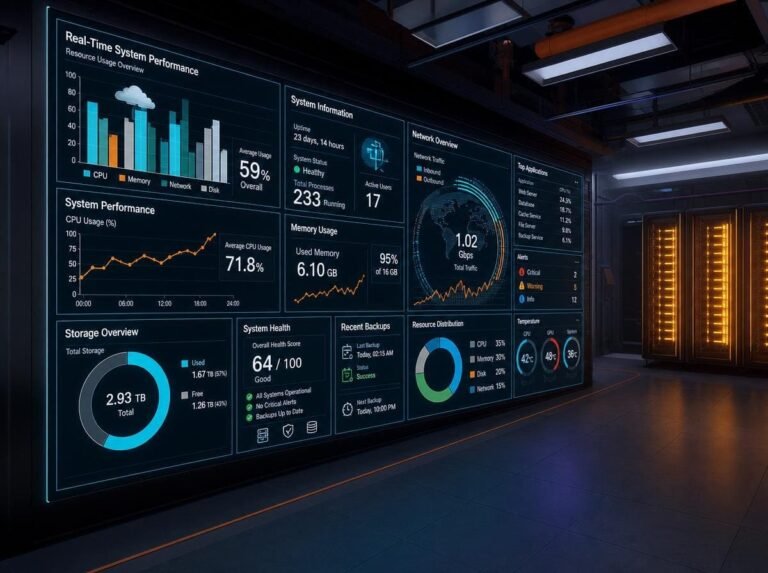
Real-time monitoring tracks infrastructure health. Dashboards visualize key performance indicators. Teams identify issues immediately upon occurrence. Proactive monitoring helps prevent potential downtimes before they impact users.
Application performance monitoring measures user experience. Response times indicate service quality. Transaction tracing reveals bottleneck locations. Log aggregation centralizes diagnostic information. Search capabilities enable rapid troubleshooting.
- Enhanced visibility into system performance
- Faster issue detection and resolution
- Improved user satisfaction through optimized response times
- Data-driven decision-making for infrastructure improvements
- Comprehensive reporting for compliance and audits
Cost Management
Effective cost management is crucial for maximizing cloud investments. Budget alerts prevent overspending automatically. Organizations set spending thresholds per project. Notifications trigger before limits exceed.
Cost allocation tracks expenses by department. Chargeback models distribute costs appropriately. Visibility encourages responsible resource usage. Optimization recommendations identify savings opportunities. Unused resources get flagged for removal. Rightsizing suggestions improve efficiency continuously.
- Regularly review and adjust budgets based on usage trends.
- Implement tagging strategies for better resource tracking.
- Utilize reserved instances for predictable workloads.
- Monitor and analyze spending patterns with reporting tools.
- Engage teams in cost-awareness initiatives to promote accountability.


Automation and Orchestration
Workflow automation reduces manual effort. Routine tasks execute automatically on schedules. Error rates decrease through consistent processes. This leads to increased productivity and allows teams to focus on strategic initiatives.
Self-healing systems detect and resolve issues. Automated remediation handles common problems. Human intervention focuses on complex situations. Orchestration coordinates multiple systems simultaneously. Complex deployments happen reliably at scale.
- Streamlined processes enhance operational efficiency.
- Increased reliability minimizes downtime.
- Scalability supports growing business needs.
- Integration with existing tools simplifies workflows.
- Enhanced visibility improves performance tracking.
Major Cloud Providers and Platform Comparison
Multiple cloud providers offer infrastructure services. Each platform provides unique capabilities. Comparing options helps organizations choose appropriately. Evaluating performance metrics ensures optimal service delivery. Cost analysis can reveal potential savings over time. Security features are crucial for protecting sensitive data. Reliable support can significantly enhance operational efficiency.
Amazon Web Services
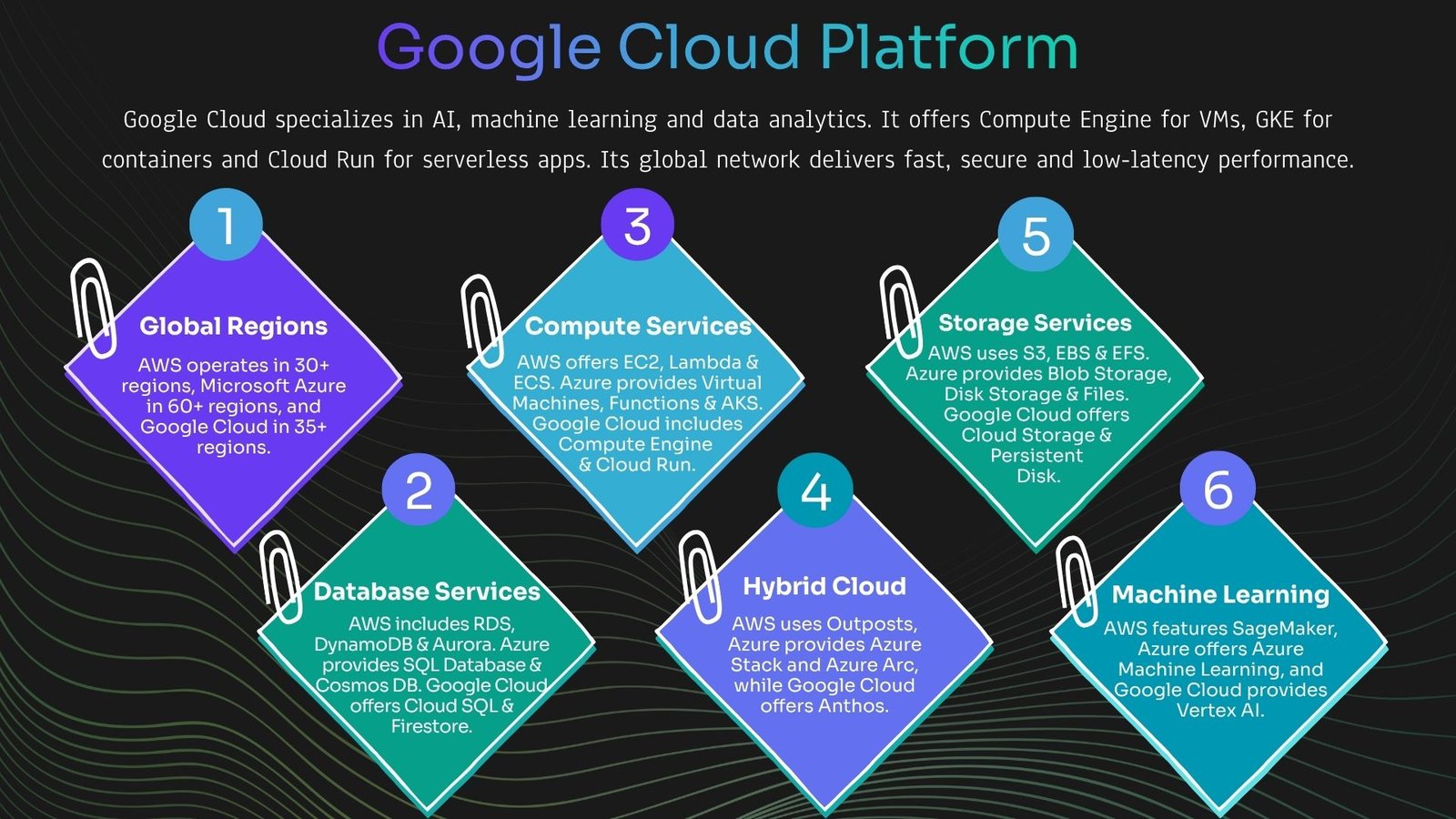
Amazon Web Services pioneered cloud infrastructure services. The platform offers the most comprehensive service portfolio. AWS operates in numerous regions worldwide. Compute services include versatile virtual machine options. Elastic Compute Cloud provides customizable instances. Lambda enables serverless computing without infrastructure management. Storage services meet various needs. Simple Storage Service provides scalable object storage. Elastic Block Store offers high-performance volumes.
Microsoft Azure
Microsoft Azure integrates seamlessly with enterprise software. Organizations using Microsoft products prefer Azure. Hybrid cloud capabilities connect on-premises and cloud infrastructure. Virtual machines run Windows and Linux workloads. Azure Kubernetes Service orchestrates containerized applications. Functions provide serverless execution options. Azure Active Directory manages identity across environments. Integration with Office 365 simplifies authentication. Enterprise customers benefit from unified management.
Google Cloud Platform
Google Cloud emphasizes data analytics and machine learning. Big data tools process massive datasets efficiently. Pre-trained machine learning models accelerate development. Compute Engine delivers virtual machine instances. Kubernetes Engine manages containerized workloads natively. Cloud Run executes containers automatically.Network infrastructure provides exceptional performance. Google’s global fiber network reduces latency. Content delivery takes place through extensive edge locations.
Choosing the Right Cloud Provider
Selection depends on specific organizational needs. Existing technology investments influence decisions. Skill availability affects implementation success rates. Service requirements guide provider selection. Specialized capabilities matter for certain workloads. Geographic coverage impacts global deployments. Pricing models vary across cloud providers. Organizations compare costs for their usage patterns. Long-term commitments offer substantial discounts.
Emerging Cloud Technologies and Future Trends
Cloud infrastructure continues evolving rapidly. New technologies emerge regularly. Understanding trends helps organizations prepare strategically. Innovations like serverless computing and AI-driven services are reshaping the landscape. Organizations must adapt to leverage these advancements effectively. Staying informed about competitive offerings is crucial for success.
Edge Computing Integration
Edge computing processes data near sources. Cloud infrastructure extends to edge locations. Latency decreases for time-sensitive applications. This proximity to data sources enhances overall system efficiency.
Internet of Things devices generate massive data volumes. Edge processing reduces bandwidth requirements. Only relevant information transfers to data centers. 5G networks enable sophisticated edge applications. Cloud providers deploy infrastructure at edge locations. New use cases become feasible technically.
- Improved response times for critical applications.
- Reduced data transfer costs and bandwidth usage.
- Enhanced privacy and security by processing data locally.
- Increased reliability through local data handling.
- Support for real-time analytics and decision-making.


Artificial Intelligence and Machine Learning
Machine learning services democratize artificial intelligence. Organizations build intelligent applications without deep expertise. Pre-trained models accelerate development significantly.
Cloud computing power enables complex model training. GPU instances process neural networks efficiently. Training time decreases from weeks to hours. AutoML platforms automate model development. Algorithms select optimal architectures automatically. Non-experts create accurate predictions reliably.
- Enhanced customer experiences through adapted recommendations.
- Improved operational efficiency with predictive maintenance.
- Advanced analytics for better market insights.
- Automation of routine tasks, freeing up human resources.
- Faster product development cycles through rapid prototyping.
Serverless Computing Evolution
Serverless platforms eliminate infrastructure management completely. Developers focus exclusively on application logic. Scaling happens automatically and transparently.
Function-as-a-service executes code in response to events. Organizations pay only for actual execution time. Idle periods incur zero charges. Container-based serverless services offer more flexibility. Applications package with dependencies completely. Deployment remains equally simple.
- Enhanced scalability to meet fluctuating demand.
- Reduced time-to-market for new applications.
- Cost-effective resource utilization based on actual usage.
- Improved developer productivity by removing infrastructure concerns.
- Seamless integration with existing cloud services and APIs.


Multi-Cloud Management Platforms
Organizations adopt multi-cloud strategies increasingly. Management complexity grows with provider diversity. Unified platforms simplify multi-cloud operations.
Effective management enhances operational agility and responsiveness to market changes. Policy enforcement spans multiple clouds consistently. Security rules apply regardless of provider. Compliance verification covers all environments. Cost optimization analyzes spending across providers. Organizations avoid vendor lock-in effectively.
- Streamlined management of diverse cloud environments.
- Improved visibility and control over cloud resources.
- Enhanced security through consistent policy application.
- Increased flexibility in workload deployment.
- Better alignment of cloud resources with business objectives.