
Inventiv Cloud:
Enterprise Cloud Solutions for Digital Transformation

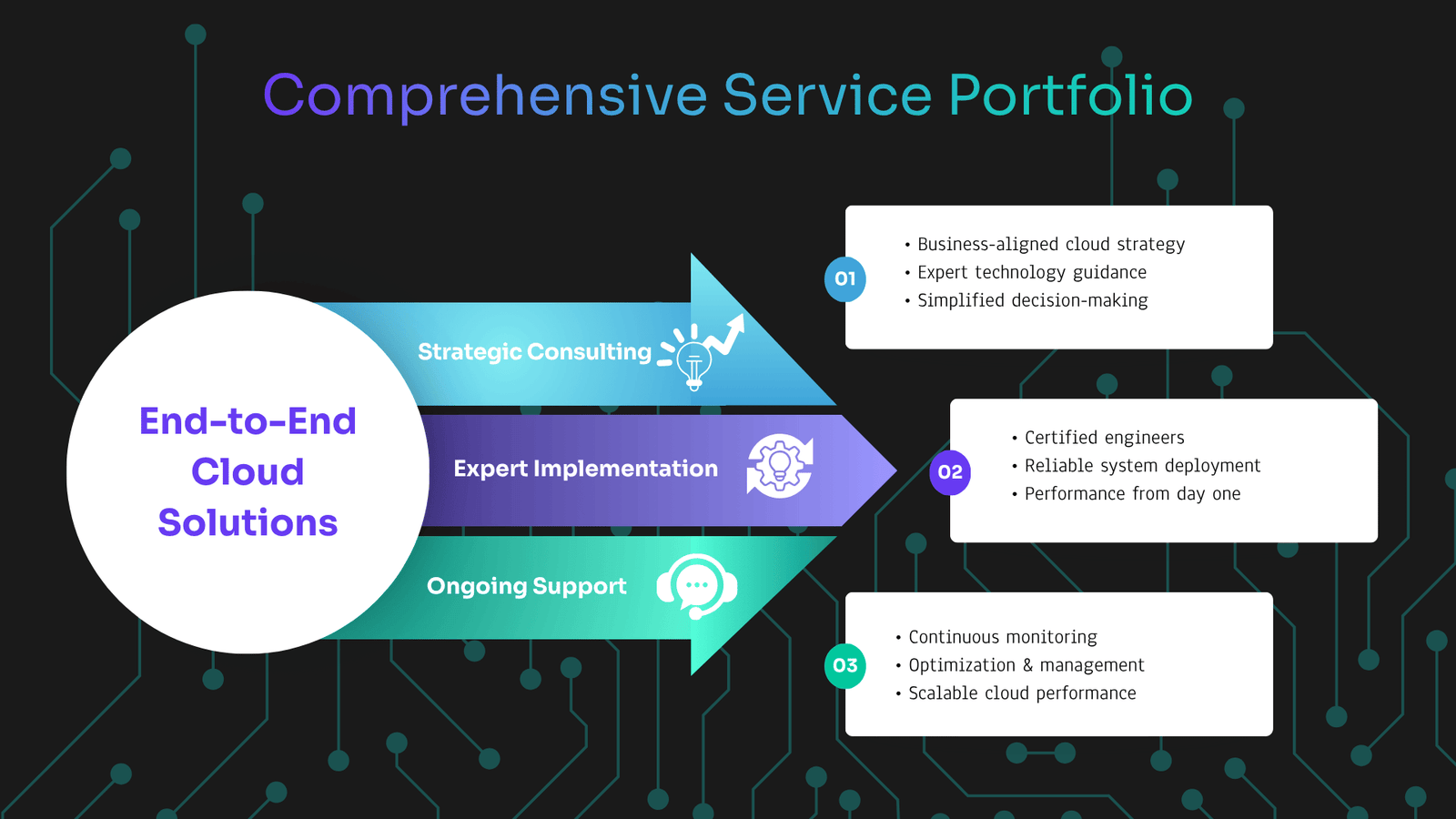
Businesses today face mounting pressure to modernize infrastructure while controlling costs. Inventiv Technology delivers comprehensive cloud solutions designed to transform operations and drive growth. Our expert team specializes in cloud migration, infrastructure optimization, and multi-cloud management.
Organizations struggle with legacy systems that limit agility and innovation. Inventiv Cloud services eliminate these barriers through strategic planning and implementation. We partner with businesses to create tailored cloud architectures that align with specific goals and budgets.
About Inventiv Cloud
Inventiv Cloud has been at the forefront of enterprise technology transformation. Our journey spans more than 25 years of continuous innovation in cloud infrastructure, security, and management services. This extensive experience translates directly into better outcomes for our clients.
We built our reputation on trusted partnerships rather than transactional relationships. Every client engagement focuses on long-term success, not short-term wins. This approach has earned us the confidence of industry leaders who depend on our expertise for their most critical systems.
When you utilize Inventiv Cloud, you’re essentially accessing a suite of cloud services designed to optimize your business operations. Inventiv Cloud provides a robust infrastructure managed by expert teams who take care of all aspects of cloud maintenance, security, and scalability.
*To learn more, visit us at www.inventivcloud.com
Transform Your Business with Inventiv Cloud Solutions
Our cloud experts will assess your infrastructure and create a custom transformation strategy. Get started with a complimentary consultation today.
Cloud Strategy and Consulting
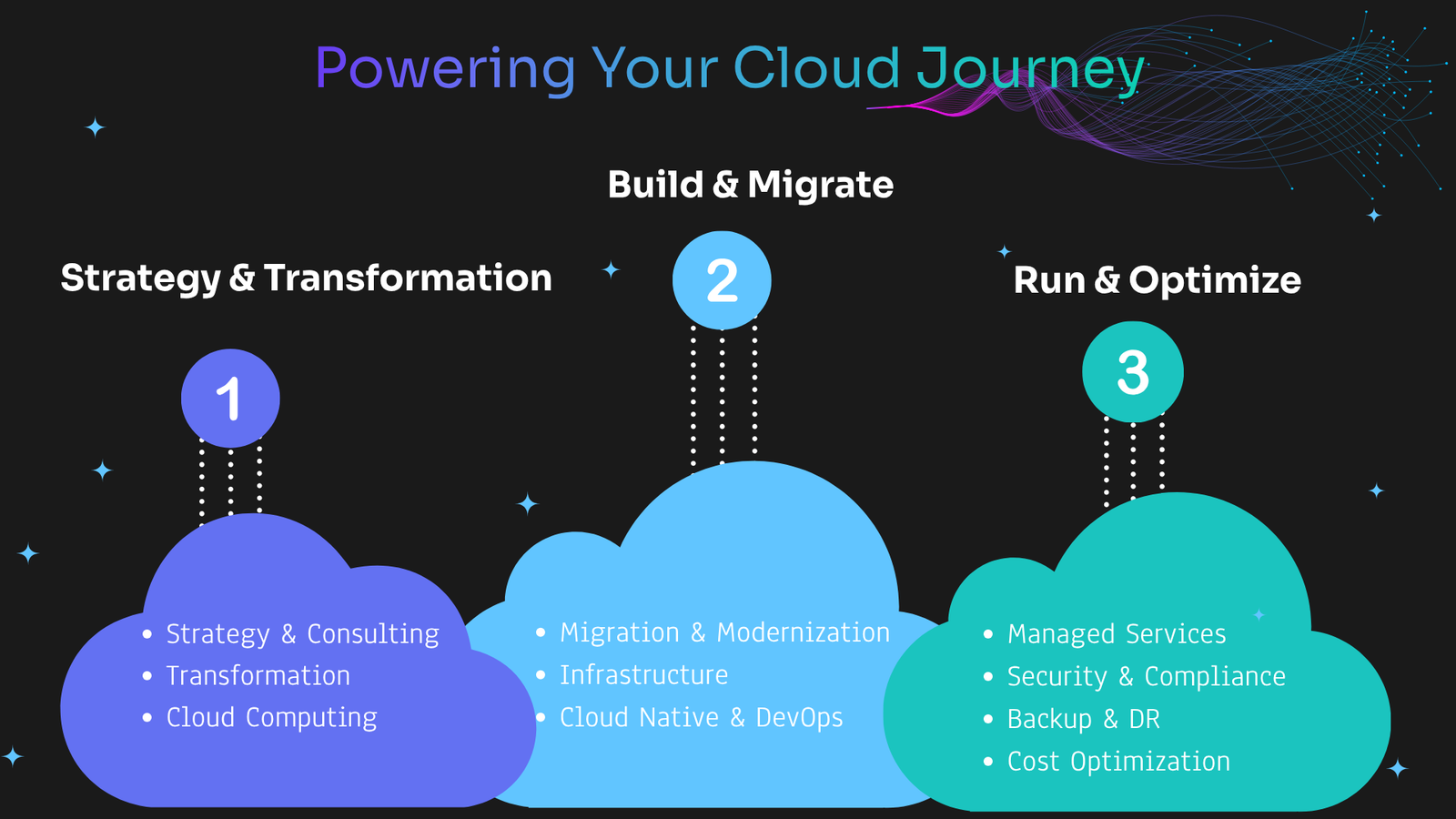
Cloud consulting services provide expert guidance throughout your cloud journey. Professional consultants help organizations develop cloud strategies, select appropriate technologies, design architectures, and navigate complex implementation challenges. These services ensure cloud investments align with business objectives and deliver maximum value.
Many organizations lack internal expertise to effectively plan and execute cloud initiatives. Cloud consulting services bridge this gap by providing access to experienced professionals who understand both technology and business requirements. Consultants bring best practices learned from numerous implementations across different industries.
Why Organizations Choose Cloud Consulting
Partnering with cloud consulting services accelerates secure digital transformation. Experts help you optimize cloud costs, bypass technical hurdles, and scale rapidly.
- Access specialized expertise without permanent hires to optimize critical IT infrastructure.
- Accelerate cloud initiatives with proven methodologies for rapid digital transformation.
- Avoid costly mistakes through experienced guidance & cloud security.
- Gain objective perspectives on technology decisions to maximize overall cloud ROI.
- Transfer knowledge to internal teams ensuring long-term operational efficiency.
- Scale consulting resources up or down as needed for flexible cloud management.


Key Consulting Deliverables
Our consulting deliverables empower organizations with strategic insights and actionable plans for successful cloud adoption. Each deliverable plays a crucial role in ensuring a seamless transition to cloud environments.
- Comprehensive cloud strategy and detailed roadmap documents
- Innovative architecture designs and precise technical specifications outlined
- Thorough migration plans and effective execution playbooks developed
- Robust cost models and accurate financial projections established
- In-depth security assessments and actionable recommendations provided
- Detailed performance optimization reports and insights generated
- Comprehensive training materials and user-friendly documentation created
- Clear governance frameworks and essential policies implemented
Plan, optimize, and scale your cloud journey with strategic guidance and expert consulting.
Cloud Transformation
The cloud transformation journey represents more than simple technology migration. It fundamentally reshapes how organizations operate, deliver customer experience, and compete in rapidly evolving markets. Companies pursuing cloud transformation gain access to cutting-edge tools, improved data security, and the agility needed to respond quickly to changing business objectives.
The transformation cloud approach involves multiple interconnected components. Companies must evaluate existing infrastructure, develop migration strategies, redesign applications for cloud environments, and establish new operational processes. Successful cloud transformation requires careful planning, technical expertise, and change management to ensure business continuity throughout the journey.
Strategic Business Benefits
Cloud transformation delivers substantial advantages that directly impact organizational performance and competitive positioning. By leveraging innovative cloud solutions, businesses can stay ahead of the competition and adapt to changing market demands.
- Reduced operational costs through flexible pay-as-you-go resource consumption
- Enhanced business agility enabling quicker market response times
- Improved scalability effectively supporting future growth requirements
- Accelerated innovation through immediate access to cloud solutions
- Strengthened data security through advanced cloud protection measures
- Improved collaboration across teams with cloud-based tools
- Access to cutting-edge technologies that drive competitive advantage


Operational Efficiency Gains
Organizations modernizing business operations through cloud transformation achieve significant efficiency improvements across departments. This transformation fosters a culture of innovation, empowering teams to collaborate more effectively and drive results.
- Streamlined IT management reducing administrative overhead
- Automated deployment processes accelerating application delivery
- Centralized resource management simplifying infrastructure governance
- Enhanced collaboration tools improving team productivity
- Improved customer experience through faster service delivery
Reimagine your business with scalable, agile, and future‑ready cloud transformation solutions.
Cloud Computing
Cloud computing encompasses several deployment models and service types. Understanding these different options helps businesses choose the right approach for their specific requirements. Each type of cloud computing offers distinct advantages depending on your security needs, compliance requirements, and operational preferences.
Modern cloud computing evolved from earlier technologies like virtualization and distributed computing. Virtual machines allow multiple operating systems to run on single physical servers, maximizing hardware efficiency.
This breakthrough made cloud services economically viable and widely accessible. Cloud computing represents a fundamental shift in how organizations manage computing resources. Instead of maintaining physical hardware on premises, businesses access computing power, storage, and applications through the internet.
How Cloud Computing Works
Cloud computing’s architecture is layered, beginning with physical hardware in data centers. Users access cloud services through web interfaces or APIs, managing virtual machines and storage without needing deep technical knowledge. Cloud providers take care of hardware and security, enabling organizations to focus on their applications and data, showcasing a key advantage of cloud adoption.
- Layered architecture significantly enhances resource management efficiency.
- Virtualization technology allows for more efficient hardware use.
- User-friendly and intuitive interfaces simplify user interactions.
- Providers effectively manage security and reliability for users.
- Organizations can easily focus on their core business applications exclusively.
- Collaboration tools facilitate seamless communication among teams.


Types Of Cloud Computing
- Public Cloud: Public cloud provides shared resources over the internet, allowing organizations to access services without managing infrastructure to drastically reduce upfront hardware capital expenditures.
- Private Cloud: Private cloud offers dedicated resources for a single organization, enhancing security and control over data for highly regulated industries requiring strict compliance standards.
- Hybrid Cloud:Hybrid cloud enables data and applications to move between public and private environments for greater flexibility and optimized workload distribution during peak traffic demands.
- Multi-Cloud:Multi-cloud involves using multiple cloud providers to optimize capabilities and prevent vendor lock-in by leveraging the unique strengths of different platforms.
Leverage powerful, scalable cloud computing solutions to drive performance, flexibility, and growth.
Cloud Migration And Modernization
Modern businesses face mounting pressure to transform legacy systems into agile cloud infrastructure. Organizations struggle with outdated applications that limit growth and increase operational costs.
Cloud migration and modernization offer a proven path forward. These strategies help companies take full advantage of cloud computing while addressing technical debt.
This comprehensive guide explores everything you need to know about moving to the cloud. You’ll discover proven strategies, best practices, and practical approaches to modernize your infrastructure successfully.
Benefits of Professional Migration Services
Engaging professional migration services not only streamlines the transition to the cloud but also ensures that best practices are followed throughout the process. This leads to a more effective and efficient migration experience for organizations.
- Reduced migration risks through proven methodologies and strategies
- Faster completion with experienced migration teams and professionals
- Minimized business disruption during transition and implementation
- Optimized cloud architecture from day one and beyond
- Knowledge transfer to internal IT teams and staff
- Comprehensive testing and validation processes conducted
- Enhanced security measures during the migration process implementation
- Access to expert insights for strategic planning and execution


Common Migration Challenges
Migrating legacy systems to the cloud introduces several complex operational, technical, and cultural obstacles. Successfully navigating these hurdles requires careful pre-migration planning and robust risk-mitigation strategies.
- Legacy compatibility issues: Monolithic apps requiring refactoring to run in cloud.
- Bandwidth limitations: Slow transfers causing disruptions & delays.
- Unexpected dependencies: Undocumented relationships discovered mid-migration stall.
- Compliance and regulations: Strict residency rules complicating strategies.
- Technology skills gaps: Teams lacking expertise, causing bottlenecks.
- Change management resistance: Staff resisting workflows, stalling.
Cloud Infrastructure
Cloud infrastructure solutions provide the foundation for modern digital business operations. These comprehensive platforms deliver computing power, storage capacity, networking capabilities, and management tools necessary to run enterprise applications at scale.
Organizations rely on robust cloud infrastructure to support mission-critical workloads. The infrastructure must deliver consistent performance, maintain high availability, and scale seamlessly as business demands change. Cloud infrastructure solutions eliminate the complexity and expense of building and maintaining this capability internally.
At its core, cloud infrastructure eliminates the need for physical hardware ownership. Instead of purchasing and maintaining expensive equipment, organizations access computing resources through service providers like Inventiv Cloud.
Core Components
The foundational layers of cloud architecture rely on a precise balance of raw processing power and versatile data management. Correctly aligning these computational and storage tiers ensures optimal performance across varying corporate workloads.
Virtual machines (VMs) deliver the essential raw processing power required to run applications and services, offering highly specialized instances tailored for everything from basic general computing to intense, high-performance tasks.
Persistent storage services guarantee secure data retention across diverse performance tiers, utilizing highly scalable object storage for unstructured media files and low-latency block storage optimized for transactional databases.

Infrastructure as Code & Automation
Transitioning from manual configuration to code-driven deployment is fundamental to managing modern, scalable cloud environments. Shifting to software-defined infrastructure eliminates configuration drift and unlocks rapid, repeatable environment scaling.
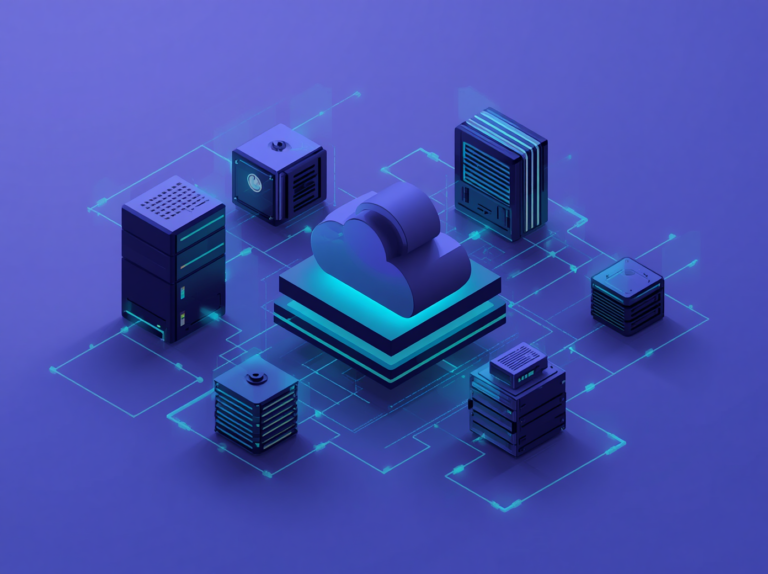
Infrastructure as Code (IaC) defines complex infrastructure configurations in machine-readable files instead of manual setups, allowing teams to version control environments and guarantee absolute consistency across development, testing, and production.
Automated provisioning and management streamlines highly repetitive tasks to minimize costly human errors, dynamically scale resources based on real-time demand, and deploy security patches across entire environments without manual intervention.
Build a secure, scalable, and high-performance cloud infrastructure to support your evolving business needs.
Cloud Native/DevOps
DevOps services combine development and operations practices to accelerate software delivery while improving quality and reliability. This approach breaks down traditional silos between development teams that create applications and operations teams that run them. Cloud computing provides the ideal platform for implementing DevOps practices at scale.
Organizations adopt DevOps to reduce time from development to production deployment. Traditional software development cycles often take weeks or months to release new features. DevOps practices enable teams to deploy changes multiple times per day while maintaining stability and quality.
Inventiv Cloud specializes in guiding businesses through this journey. Our Cloud Native & DevOps Services combine strategic consulting with hands-on implementation. We help teams modernize infrastructure, automate processes, and build resilient applications.
Benefits of DevOps
Integrating modern DevOps practices directly with scalable cloud resources dramatically accelerates the software development lifecycle while substantially reducing daily operational overhead. Seamlessly combining automated, software-defined infrastructure with rapid continuous deployment pipelines establishes a highly resilient, reliable delivery lifecycle that minimizes human error, optimizes resource utilization, and empowers engineering teams to deliver value to customers at unprecedented speeds.
- Cloud-driven automation capabilities integrate continuous integration, deployment, and infrastructure management tools to dramatically reduce the daily complexity of software delivery.
- Faster deployment cycles provide organizations with a strong competitive advantage by enabling rapid feature releases and immediate iterations based on real-world feedback.


Implementing DevOps Successfully
Successful DevOps adoption relies heavily on bridging the gap between culture and technology. Beginning with small, manageable milestones allows organizations to build momentum and prove value early on. Ultimately, scaling these collaborative workflows across the entire enterprise becomes much smoother once these foundational habits are firmly established.
- Cultural transformation to break down organizational silos, encourage open collaboration, and build a resilient culture that values continuous learning from failure.
- Incremental implementation starting with small, focused pilot projects to demonstrate immediate value before attempting a complete, wide-scale organizational rollout.
Accelerate innovation with cloud‑native development and DevOps practices for faster, reliable, and automated delivery.
Managed Cloud Services
Managed cloud services allow organizations to outsource the day-to-day management of cloud infrastructure and applications. Expert service providers handle routine operational tasks, security monitoring, performance optimization, and technical support. This model enables businesses to benefit from cloud computing without building internal expertise or dedicating resources to infrastructure management.
Organizations choose managed cloud services for several compelling reasons. Many businesses lack the specialized skills required to operate complex cloud environments effectively. The rapid pace of cloud technology evolution makes it challenging for internal teams to maintain current expertise across all platforms and services.
Managing cloud infrastructure demands specialized expertise that most businesses struggle to maintain internally. Organizations face mounting pressure to optimize cloud costs while ensuring security and performance. This challenge intensifies as cloud environments grow more complex.
What Managed Cloud Services Include
Comprehensive managed services encompass the entire cloud lifecycle, enabling organizations to fully utilize their cloud environments. This holistic approach ensures systems operate efficiently and securely.
- Infrastructure management to handle resource provisioning, performance monitoring, and system updates keeping your cloud environment running at peak efficiency.
- Security management implementing strong controls, monitoring threats, and ensuring regulatory compliance establishing defense mechanisms and assessments to protect sensitive assets.
- Application management covering deployment and performance optimization to ensure your critical applications remain scalable, responsive, and available under traffic loads.


Benefits of Managed Cloud Services
Managed cloud services lessen the load on internal IT teams, enabling them to shift from routine tasks to strategic initiatives that enhance business value.
- 24/7 monitoring and alerting to resolve anomalies before impacting end-users.
- Performance optimization to fine-tune workloads, ensuring speed.
- Threat detection and response tools to block attacks in real-time.
- Security patch deployment to apply updates, closing vulnerabilities.
- Application deployment utilizing pipelines to roll out features faster and reliably.
- Performance monitoring of metrics to guarantee environment scales during traffic.
Simplify operations and ensure reliability with fully managed cloud services tailored to your business needs.
Cloud Security & Compliance
Cloud security solutions protect data, applications, and infrastructure from cyber threats while ensuring compliance with regulatory requirements. Security in cloud environments requires a comprehensive approach that addresses multiple layers from network controls to application security and data protection.
Organizations moving to the cloud must understand the shared responsibility model for security. Cloud providers secure the underlying infrastructure including physical data centers, networks, and hypervisors. Customers remain responsible for securing their data, applications, user access, and configurations within the cloud environment.
Cloud security and compliance form the foundation of modern business operations. Organizations must protect sensitive data while meeting strict regulatory requirements. This challenge grows more complex as cloud adoption accelerates.
Essential Cloud Security Components
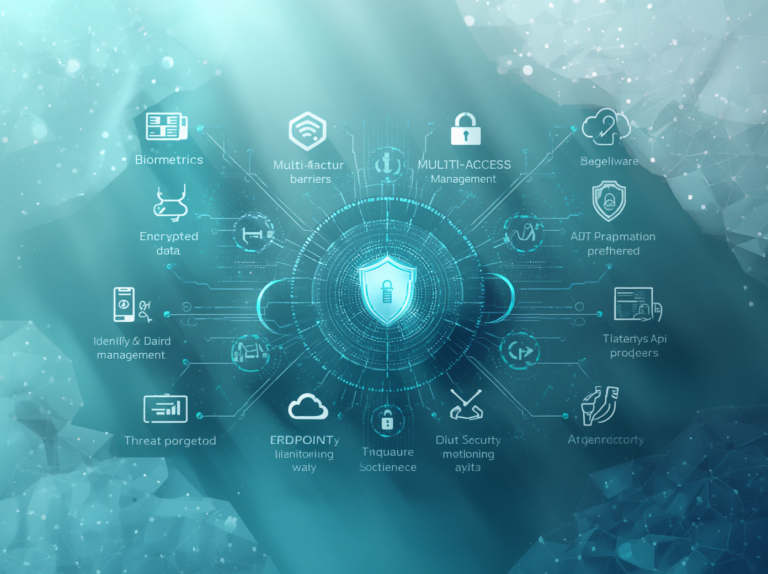
Securing your cloud infrastructure requires a multi-layered defense strategy. Implementing these core security pillars ensures complete protection against evolving cyber threats and data breaches.
- Identity and access management (IAM): Secures vital cloud resources through multi-factor authentication to block unauthorized access across enterprise networks.
- Network security: Encrypts critical data in transit with virtual private networks and advanced firewalls to safeguard sensitive workloads.
- Data encryption: Ensures confidential information is unreadable without decryption keys protecting data at rest and in transit continuously.
- Threat detection: Identifies malicious risks through continuous monitoring tools and automated systems to block cyber attacks.

Essential Compliance Frameworks
Meeting global compliance frameworks is essential for robust cloud security and regulatory alignment. Adhering to these industry standards builds trust while mitigating security breaches and severe legal penalties.
- GDPR: All industries handling EU data ensuring strict consumer privacy rights.
- HIPAA: Healthcare providers safeguarding patient medical records securely.
- PCI DSS: Payment processing merchants securing credit card transaction databases.
- SOC 2: Service providers managing customer data with strict security controls.
- ISO 27001: All industries establishing global information security management systems.
- FedRAMP: Government services requiring highly secure, authorized cloud applications.
Protect your cloud environment while ensuring compliance with industry standards through robust security and governance solutions.
Cloud Backup & Disaster Recovery
Backup disaster recovery represents two connected but distinct processes. Each plays a critical role in your business resilience strategy. Your data represents more than files. It holds customer information, financial records, and operational knowledge. Without proper backup disaster recovery systems, one incident can shut down your operations.
Disaster recovery services protect organizations from data loss and extended downtime during unexpected events. Natural disasters, cyberattacks, hardware failures, and human errors can all disrupt business operations. Cloud-based disaster recovery provides reliable, cost-effective protection that ensures rapid recovery when problems occur.
Traditional disaster recovery required duplicate data centers and infrastructure, making it prohibitively expensive for many organizations. Cloud computing democratizes disaster recovery by providing affordable, scalable solutions accessible to businesses of all sizes.
Understanding Recovery Objectives
Defining your recovery objectives is critical for creating an effective disaster recovery plan. These metrics establish your tolerance for data loss and downtime, directly shaping your IT infrastructure budget.
- Establish Recovery Point Objective (RPO) to define acceptable data loss during an outage.
- Define Recovery Time Objective (RTO) to set timelines for restoring business operations.
- Align backup frequencies with RPO targets ensuring database records are saved.
- Design high-availability architecture meeting low RTOs utilizing automatic failover servers.
- Balance recovery with costs to avoid over-engineering applications.
- Perform disaster recovery tests to verify RPO and RTO metrics are achievable.

Backup Strategies and Methods
A robust backup strategy combines multiple recovery methods to guarantee data integrity. Choosing the right approach balances storage costs against your target recovery times.
- Run regular full backups to create a complete, easily restorable copy of all system data.
- Perform daily incremental backups to quickly capture daily changes while minimizing required storage space.
- Utilize automated schedule triggers to run backups during low-traffic hours to prevent performance lags.
- Implement the 3-2-1 backup rule by keeping three copies of data across two different media types.
- Store at least one backup offsite or in a secure, isolated cloud environment for disaster recovery.
- Conduct routine restoration tests to verify that your backup files are uncorrupted and ready.
Ensure business continuity with reliable cloud backup and rapid disaster recovery solutions.
Performance & Cost Optimization
Cloud cost optimization reduces cloud spending while maintaining or improving performance and capabilities. Many organizations find cloud costs exceed initial projections due to inefficient resource usage, lack of visibility, and suboptimal service selections. Systematic optimization can reduce cloud bills by thirty to forty percent without sacrificing functionality.
Core Cost Optimization Strategies
To optimize your cloud spend, you need deep visibility into resource utilization first. The following proven strategies target key cost drivers to systematically reduce expenses while maintaining peak performance.
- Right-size underutilized compute instances to match actual workload performance demands.
- Schedule automatic start and stop times for non-production environments during off-hours.
- Identify and delete orphaned storage volumes that are no longer attached to active resources.
- Leverage commitment discounts like Savings Plans and reserved instances for predictable workloads.
- Implement automated auto-scaling policies to handle real-time traffic spikes efficiently.
- Set up real-time billing alerts to prevent cloud budget overruns.


Performance Optimization Fundamentals
To maximize system speed and user experience, continuous performance monitoring is essential. Fast systems handle higher transaction volumes using fewer resources, directly driving down your overall cloud costs.
- Implement robust caching strategies to reduce database load and speed up response times.
- Deploy a Content Delivery Network (CDN) to cache and serve static assets closer to users.
- Configure dynamic auto-scaling rules to handle sudden traffic spikes without performance degradation.
- Optimize database queries and indexing to eliminate system bottlenecks and speed up retrieval.
- Use load balancers to distribute traffic evenly across multiple healthy server instances.
- Compress images and minimize code files to dramatically improve frontend page load speeds.
Maximize efficiency and reduce cloud costs with optimized performance and smarter resource utilization.
Why Businesses Choose Inventiv Technology for Cloud Services
Organizations partner with Inventiv Technology because we deliver measurable results through proven cloud expertise. Our team combines deep technical knowledge with business acumen to create solutions that drive growth and efficiency.
Industry Certifications
Inventiv Technology maintains partnerships and certifications with major cloud providers. Our team holds advanced credentials including AWS Solutions Architect, Google Cloud Professional, and Azure Administrator certifications.
These certifications validate our technical expertise and ensure we stay current with latest platform capabilities and best practices.