Managed IT Services:
Modern Infrastructure Solutions
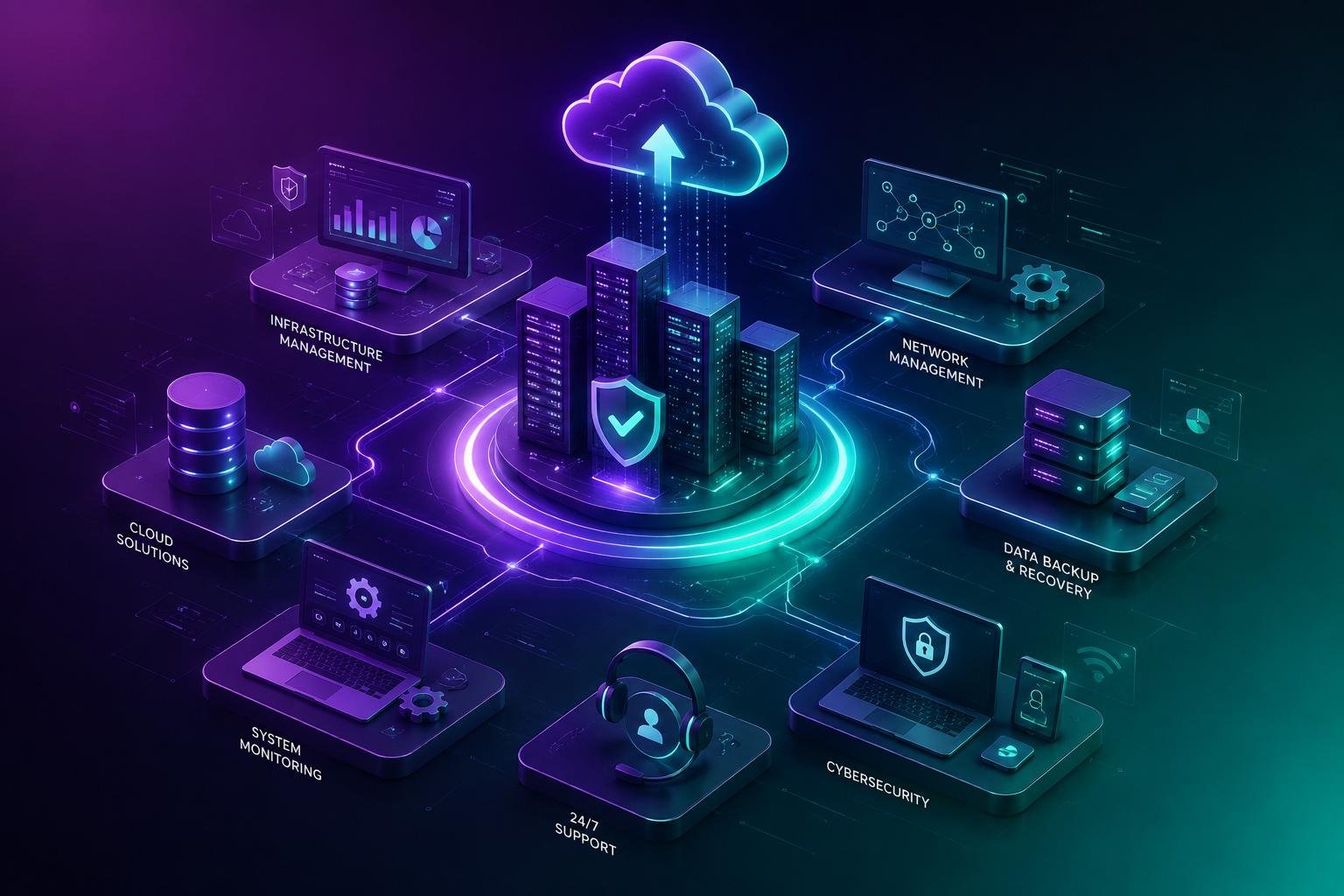
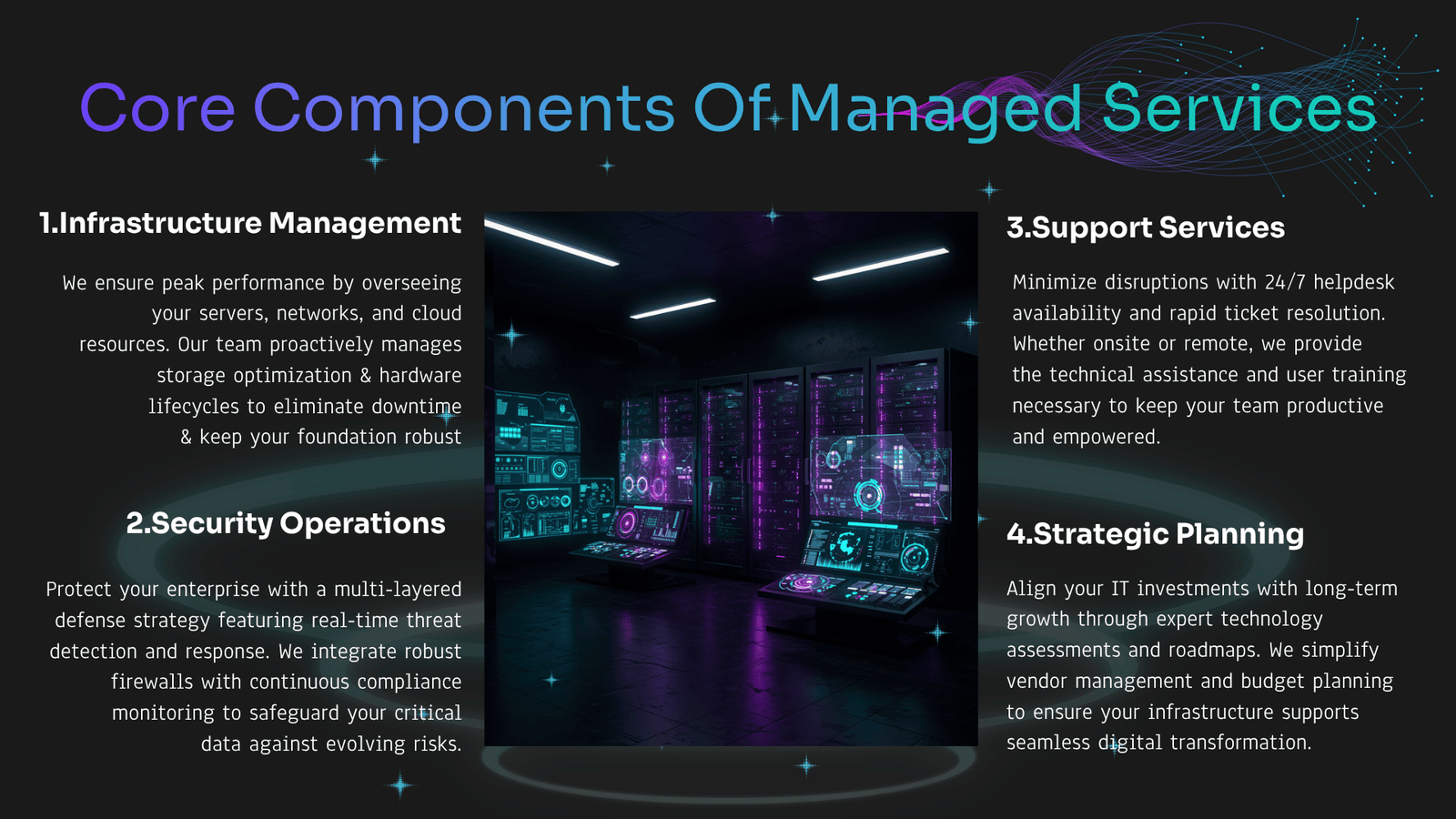
Inventiv Technology delivers comprehensive managed IT services that transform technology from a cost center into a strategic advantage. Our team of certified professionals provides proactive monitoring, expert support, and strategic guidance across your entire IT infrastructure. We handle network management, cloud operations, security, and daily support tasks so your organization can focus on growth and innovation.
With over a decade of experience serving businesses across multiple industries, we understand the unique challenges organizations face. Our managed services combine cutting-edge tools with human expertise to deliver reliable, secure, and scalable IT solutions. From small businesses to enterprise clients, we tailor our approach to meet specific needs and budget requirements.
Technology challenges can drain resources and distract teams from core business objectives. Organizations today face mounting pressure to maintain secure networks, protect sensitive data, and deliver seamless user experiences while controlling costs. Many businesses struggle with unpredictable IT expenses, limited technical expertise, and systems that fail at critical moments.
Discover Your IT Infrastructure Potential
Get a complimentary IT infrastructure assessment from our certified experts. We'll identify security gaps, optimization opportunities, and cost-saving strategies tailored to your organization, with no obligation required. The assessment gives you a clear, practical roadmap not just a list of problems, but a plan for what to do next. Spots are limited, so reach out today to secure your assessment.
Why Managed IT Services?
Understanding Managed IT Services
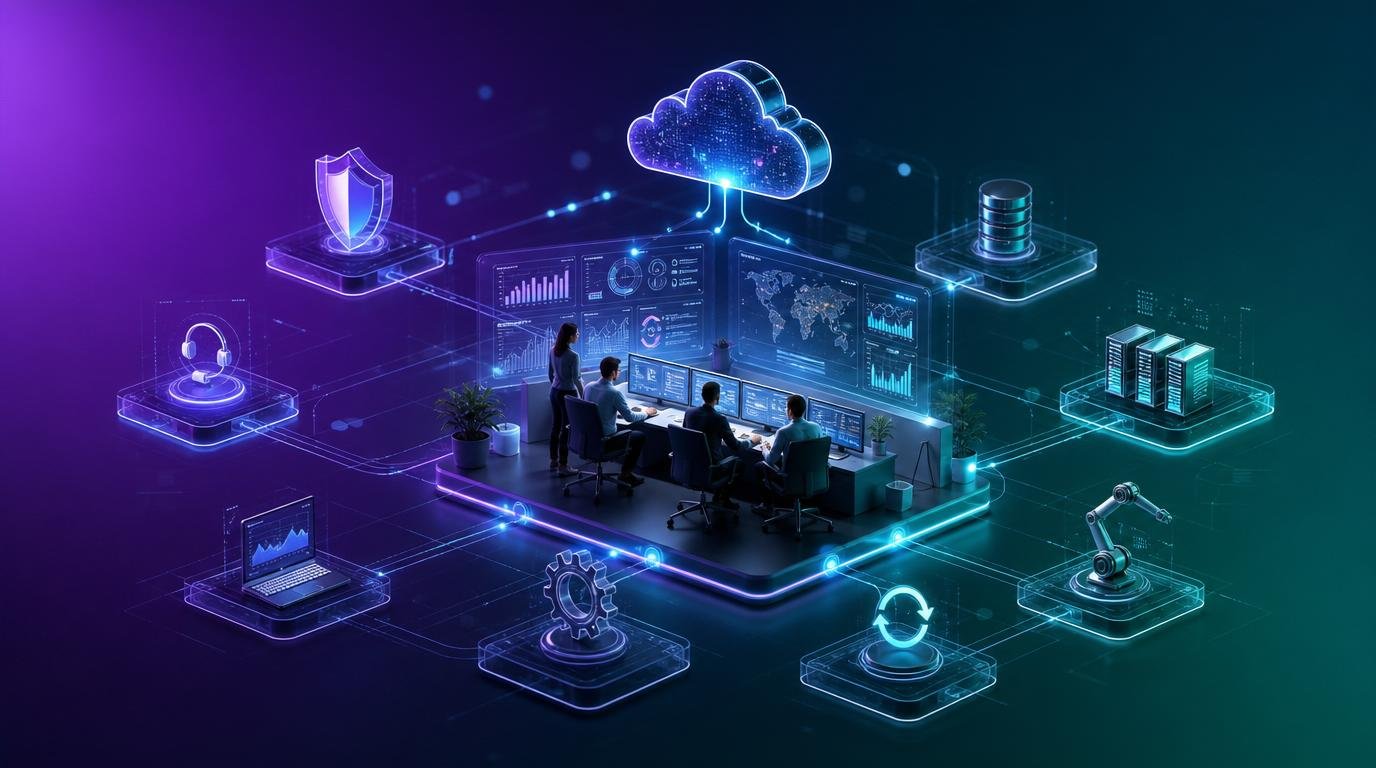
Rather than hiring full-time staff for every technical specialty, organizations partner with managed service providers who deliver comprehensive expertise across multiple domains. These providers utilize advanced monitoring tools, automation platforms, and experienced teams to maintain system health around the clock. Managed IT services represent a strategic approach to technology management where specialized providers assume responsibility for monitoring, maintaining, and optimizing business technology infrastructure. This service model shifts IT operations from reactive problem-solving to proactive management and continuous improvement.
This shift from reactive to proactive management delivers measurable advantages: reduced downtime, predictable monthly costs, and access to enterprise-grade tools and expertise that would be costly to replicate in-house. Managed IT services providers continuously analyze system performance and emerging risks, allowing issues to be identified and resolved before they disrupt business operations.
Managed Network
Network infrastructure forms the foundation of modern business operations. Every application, communication tool, and data transfer depends on reliable, high-performance network connectivity. Managed network services ensure this critical infrastructure operates optimally while adapting to changing business requirements.
Partnering with a managed network services provider means gaining proactive network monitoring, rapid issue resolution, and continuous performance optimization all without the burden of maintaining an in-house IT team. From network security and bandwidth management to scalable infrastructure planning, our team ensures your network stays resilient, secure, and ready to support your business as it grows.
This proactive approach reduces downtime, strengthens network reliability, and allows your business to focus on strategic priorities instead of day-to-day network troubleshooting.

Network Design and Architecture
Effective network management begins with proper design that accommodates current needs while providing room for growth. Our team analyzes traffic patterns, application requirements, and security policies to create network architectures that deliver optimal performance and reliability.We implement redundancy at critical points to eliminate single points of failure. Multiple internet connections, redundant core switches, and failover mechanisms ensure business continuity even when individual components experience problems.
Performance Monitoring and Optimization
Network performance directly impacts user productivity and customer experience. Our monitoring systems track bandwidth utilization, latency, packet loss, and application performance across all network segments. When performance degrades, automated alerts trigger immediate investigation and resolution.Quality of Service configurations prioritize business-critical traffic over less time-sensitive data transfers.
Network Security Management
Network security requires constant vigilance as attackers develop new techniques to penetrate defenses. We deploy next-generation firewalls that inspect traffic at the application layer, blocking sophisticated threats that traditional firewalls miss.Intrusion prevention systems analyze network traffic patterns to detect and block malicious activity.
Managed SD-WAN
Software-Defined Wide Area Networking represents a fundamental shift in how organizations connect distributed locations and cloud resources. Traditional WAN architectures relied on expensive dedicated circuits and complex routing protocols. SD-WAN leverages software intelligence to optimize traffic across multiple connection types while reducing costs.
With managed SD-WAN services, organizations gain centralized visibility and control over their entire network without the operational burden of managing it in-house. Our team continuously monitors performance, applies dynamic path selection to route traffic through the most efficient connection, and proactively addresses issues before they impact business operations.
By combining broadband, LTE, and MPLS circuits under intelligent traffic optimization, managed SD-WAN delivers greater reliability, improved application performance, and significant cost savings compared to traditional WAN infrastructure.
Intelligent Path Selection
SD-WAN solutions continuously monitor all available network paths, measuring latency, jitter, packet loss, and available bandwidth. Applications automatically route across the best-performing path based on current conditions and application requirements.When primary circuits experience degradation or failure, traffic seamlessly shifts to alternate paths without disrupting active sessions. Users remain productive while technical teams investigate and resolve underlying issues.
Cloud Integration and Optimization
Modern businesses rely heavily on cloud services for applications, storage, and infrastructure. SD-WAN optimizes cloud connectivity by routing traffic directly to cloud providers rather than backhauling through central data centers.This direct cloud access reduces latency and improves application performance, particularly for geographically distributed teams using software-as-a-service platforms. Users experience faster response times and more reliable connections to cloud resources.
Simplified Management
Traditional WAN management required configuring each router individually, creating opportunities for errors and inconsistencies. SD-WAN centralizes management through controller platforms that push configurations to all network devices simultaneously.Adding new locations becomes dramatically simpler. Devices arrive pre-configured and establish connectivity automatically upon installation. This zero-touch provisioning reduces deployment time from weeks to hours.
Managed Servers & Storage
Servers and storage systems house the applications and data that drive business operations. These systems require constant attention to maintain performance, security, and availability. Managed server and storage services ensure these critical resources operate reliably while adapting to changing workload demands.
With managed server and storage services, your organization benefits from proactive monitoring, timely patch management, and continuous performance tuning all handled by experienced infrastructure specialists.
Our team ensures your servers and storage systems remain secure, optimized, and available around the clock, while scaling seamlessly to support growing data volumes and evolving workloads.
This proactive approach minimizes downtime, strengthens data availability, and reduces the operational burden on your internal IT team, allowing your business to focus on growth.

Server Infrastructure Management
Physical and virtual servers require different management approaches, but both benefit from proactive monitoring and maintenance. We track CPU utilization, memory consumption, disk I/O, and network throughput to ensure servers operate within optimal parameters.Performance tuning identifies bottlenecks that limit application responsiveness. Database query optimization, memory allocation adjustments, and storage configuration changes extract maximum performance from existing hardware investments.
Storage System Optimization
Data volumes grow continuously, requiring careful capacity planning and efficient storage utilization. Our teams monitor storage consumption trends to forecast capacity needs and recommend expansion before systems run out of space.Tiered storage strategies place frequently accessed data on high-performance storage while archiving less-used information to cost-effective capacity-optimized systems.
Backup and Disaster Recovery
Data protection requires robust backup systems combined with tested recovery procedures. We implement comprehensive backup strategies that capture all critical data while meeting retention requirements and recovery time objectives.Multiple backup copies reside in different locations to protect against site-level disasters. Local backups enable fast recovery of individual files or databases, while offsite copies provide insurance against catastrophic events.
Managed End-point

Endpoint security forms the frontline defense against cyberattacks and data breaches. Managed endpoint services provide comprehensive oversight of all connected devices. Your organization gains visibility into every system accessing company resources. Real-time monitoring detects unusual activity immediately.
Our managed endpoint services combine advanced threat detection, automated patch management, and continuous device compliance monitoring to keep every laptop, desktop, and mobile device secure no matter where your workforce operates.
By centralizing endpoint security management, we reduce the risk of unauthorized access, quickly contain potential threats, and ensure consistent security policies across your entire device fleet. This proactive, round-the-clock approach minimizes vulnerabilities, strengthens your overall cybersecurity posture, and gives your team the freedom to focus on business priorities instead of device-level security concerns.
Deployment and Configuration
New devices receive standardized security configurations before reaching users. This process ensures that encryption is automatically enabled, safeguarding sensitive data right from the start. Additionally, all required applications are installed seamlessly without the need for user intervention, allowing employees to begin their work immediately. Company policies are enforced right away, ensuring compliance and security measures are in place from the moment the devices are powered on.
Continuous Monitoring
Every endpoint reports status constantly, allowing for continuous oversight of system health metrics that track performance trends effectively. Security scanners are employed to check for malware and vulnerabilities, ensuring that any potential threats are identified promptly. Additionally, network activity analysis plays a crucial role in detecting suspicious behavior patterns, contributing to a comprehensive security posture that safeguards the organization’s assets and data integrity.
Maintenance and Support
Proactive maintenance addresses issues before they impact users. Regular updates and automated system checks ensure devices have the latest security and performance features. Dedicated support teams provide quick assistance through remote solutions, minimizing wait times. By enhancing system performance, device productivity is maximized, and effective storage management prevents space shortages, extending system lifespan. Routine hardware diagnostics help identify anomalies early, ensuring a smooth user experience and uninterrupted service.
Managed Security
Effective security requires layered defenses working together. Internal security teams struggle to maintain adequate defenses. Threat landscapes change faster than most organizations can adapt. Security tool complexity overwhelms smaller IT departments. Skilled security professionals remain scarce and expensive.
Managed security services address these challenges by giving organizations access to enterprise-grade protection without the cost and complexity of building an in-house security team.
Our security experts provide 24/7 threat monitoring, rapid incident response, and continuous vulnerability management combining advanced tools with human expertise to stay ahead of evolving threats.
This layered, proactive approach strengthens your overall security posture, ensures faster detection and containment of attacks, and gives your business the confidence.

Multi-Layered Security Approach
No single security control provides complete protection. Defense-in-depth strategies assume some controls will fail. Multiple independent layers ensure attackers face obstacles at every stage. If one layer is compromised, others still defend your organization. Each layer has a distinct role; for example, firewalls safeguard the network perimeter, blocking unauthorized access while permitting legitimate traffic. Additionally, security information and event monitoring systems analyze alerts in real-time, facilitating quick responses to threats.
24/7 Security Monitoring and Threat Intelligence
Threats don’t observe business hours. Attacks often occur during nights and weekends when response capabilities are limited. Automated defenses need human oversight to distinguish real threats from false positives. Critical alerts require immediate investigation and response. Managed security operations centers provide continuous monitoring. Security analysts review alerts around the clock. Threat intelligence feeds provide early warning of emerging attack patterns. Your organization gains enterprise-level security capabilities without building an internal security operations center.
Rapid Threat Detection and Incident Response
Speed matters when responding to security incidents. Minutes can mean the difference between contained incidents and widespread breaches. Delayed responses allow attackers to establish persistence mechanisms. Compromised credentials enable lateral movement across networks. Data exfiltration occurs while organizations remain unaware of breaches. Automated response capabilities contain threats immediately. Suspicious accounts are disabled automatically. Compromised systems isolate from the network.
Managed Cloud
Cloud computing transforms how organizations consume technology resources. Rather than purchasing and maintaining physical infrastructure, businesses leverage cloud platforms for computing power, storage, and applications. Managed cloud services help organizations maximize cloud benefits while controlling costs and maintaining security.
With managed cloud services, organizations gain expert guidance across cloud migration, ongoing optimization, and day-to-day management ensuring workloads run efficiently across AWS, Azure, or hybrid environments.
Our team continuously monitors performance and spending, implementing cost optimization strategies and robust security controls to prevent overprovisioning and reduce unnecessary expenses.
This approach allows businesses to fully capitalize on cloud scalability and flexibility.
Cloud Strategy and Migration
Successful cloud adoption requires careful planning to identify which workloads benefit most from cloud deployment. We analyze application characteristics, data dependencies, compliance requirements, and cost implications to develop tailored cloud strategies.Migration planning addresses the technical and organizational challenges of moving systems to cloud platforms.
Cloud Cost Management
Cloud pricing models offer flexibility but can lead to unexpected costs without proper governance. We implement monitoring tools that track resource consumption and spending patterns across all cloud platforms and services.Right-sizing recommendations identify over-provisioned resources where organizations pay for capacity they do not use. Adjusting instance sizes, storage tiers, and bandwidth allocations reduces costs without impacting performance.
Cloud Security and Compliance
Cloud security operates on a shared responsibility model where providers secure infrastructure while customers protect their data and applications. We implement comprehensive security controls spanning identity management, network security, data encryption, and compliance monitoring. Identity and access management policies ensure that users and applications possess only the permissions necessary for their functions.
Accelerate Your Cloud Journey
Speak with our cloud specialists about migration strategies, cost optimization, and security best practices tailored to your organization's needs. Whether you're just starting your cloud journey or optimizing an existing environment, we're here to help you move forward with confidence. There's no one-size-fits-all approach, every recommendation is built around your specific goals, workloads, and budget.
Monitoring & Assessment
Effective IT management depends on comprehensive visibility into system health, performance, and security. Monitoring and assessment services provide the data and insights necessary to make informed decisions about technology investments and operational priorities.
Our monitoring and assessment services deliver real-time visibility into your entire IT environment tracking system performance metrics, identifying potential vulnerabilities, and flagging anomalies before they escalate into costly issues.
Through continuous network monitoring and periodic infrastructure assessments, we help you understand exactly where your technology stands today and what improvements will deliver the greatest impact.
This data-driven approach empowers smarter decision-making, reduces unplanned downtime, and ensures your IT investments are aligned with your organization’s evolving business goals.

Infrastructure Monitoring
Monitoring platforms track thousands of metrics across servers, networks, storage systems, and applications. These tools establish performance baselines during normal operations, then alert technical teams when metrics deviate from expected ranges.Automated monitoring operates continuously, identifying issues that might escape notice during manual checks. Problems detected at 3 AM receive the same prompt attention as those occurring during business hours, preventing minor issues from escalating.
Security Monitoring
Security information and event management platforms aggregate logs from firewalls, servers, applications, and security tools into unified dashboards. Correlation rules identify patterns that may indicate security incidents requiring investigation.Threat intelligence feeds provide information about emerging attack techniques and indicators of compromise. These feeds enable proactive defense against threats before they reach client networks and systems.
Compliance Assessments
Regulatory compliance requirements vary by industry but generally mandate specific security controls, data protection measures, and operational practices. Assessment services evaluate current controls against applicable standards and identify gaps requiring remediation.Continuous compliance monitoring tracks the status of required controls, alerting teams when configurations drift from compliant states.
Service Desk / Help Desk

User support services directly impact employee productivity and satisfaction. When technology problems arise, rapid resolution keeps workers focused on business objectives rather than technical frustrations. Professional service desk operations combine responsive support with systematic problem management.
Our service desk and helpdesk support provide employees with fast, reliable access to technical assistance whenever issues arise whether through phone, email, or live chat.
Backed by structured ticket management and clear escalation processes, our team resolves common issues quickly while ensuring complex problems reach the right specialists without delay.
This combination of responsiveness and process discipline minimizes downtime, boosts employee productivity, and creates a consistently positive support experience across your entire organization.
Incident & Request Management
Structured incident management processes focus on restoring normal service operations as quickly as possible following disruptions. Root cause analysis helps prevent recurring issues by identifying underlying problems and implementing long-term fixes. Service request management ensures that routine tasks such as access provisioning, software installation, and system configuration are handled efficiently and securely.
User Experience & Continuous Improvement
User satisfaction is a key focus of service desk operations, with feedback mechanisms used to evaluate support quality and identify improvement areas. This continuous feedback loop ensures the service desk evolves alongside changing user needs rather than remaining static over time. Performance metrics such as response time, resolution time, and ticket backlog are continuously monitored to optimize service delivery, with regular reviews used to spot trends before they become recurring issues.
Knowledge Management & Self-Service
Knowledge management systems organize and maintain a centralized repository of solutions, guides, and troubleshooting documentation. These platforms enable support teams to quickly access accurate information, reducing resolution times and ensuring consistent responses across all user interactions. Well-structured knowledge bases also help in capturing institutional knowledge, preventing dependency on individual team members.
Why Choose Inventiv Technology for Managed Services?
Selecting a managed service provider represents a significant business decision that impacts daily operations, security posture, and technology costs for years. Inventiv Technology distinguishes itself through proven expertise, client-focused service delivery, and commitment to long-term partnership success.
Our team brings extensive experience supporting organizations across healthcare, financial services, professional services, manufacturing, and other sectors. This diverse background provides insights into industry-specific challenges, compliance requirements, and operational priorities.Long-term client relationships demonstrate our ability to deliver consistent value and adapt to changing needs. Many clients have partnered with Inventiv Technology for five years or longer, expanding services as their organizations grow.