

Fully Managed Services

Service providers offer fully managed services that encompass complete infrastructure oversight. This model is ideal for organizations seeking a hands-off approach, where the provider manages everything from initial setup to ongoing maintenance and support. Clients benefit from expert knowledge and can focus on their core business activities without worrying about the underlying IT infrastructure, ultimately leading to increased efficiency and productivity.
Co-Managed Services

Co-managed services split responsibilities between your team and the provider. This hybrid approach allows organizations to retain control over specific functions while outsourcing others. It is beneficial for businesses with existing IT capabilities that require specialized expertise in areas, such as security or compliance. This model fosters collaboration and enables organizations to leverage the strengths of both their internal team and the service provider.
Monitoring-Only Services

Monitoring-only services provide comprehensive visibility into system performance without direct management. Providers track system performance metrics and alert you to potential issues. This model allows your team to handle remediation while benefiting from expert monitoring tools and analysis. It is suitable for organizations that prefer to maintain control over their systems but still want the reassurance of professional oversight and reliability.















Identity & Access Management
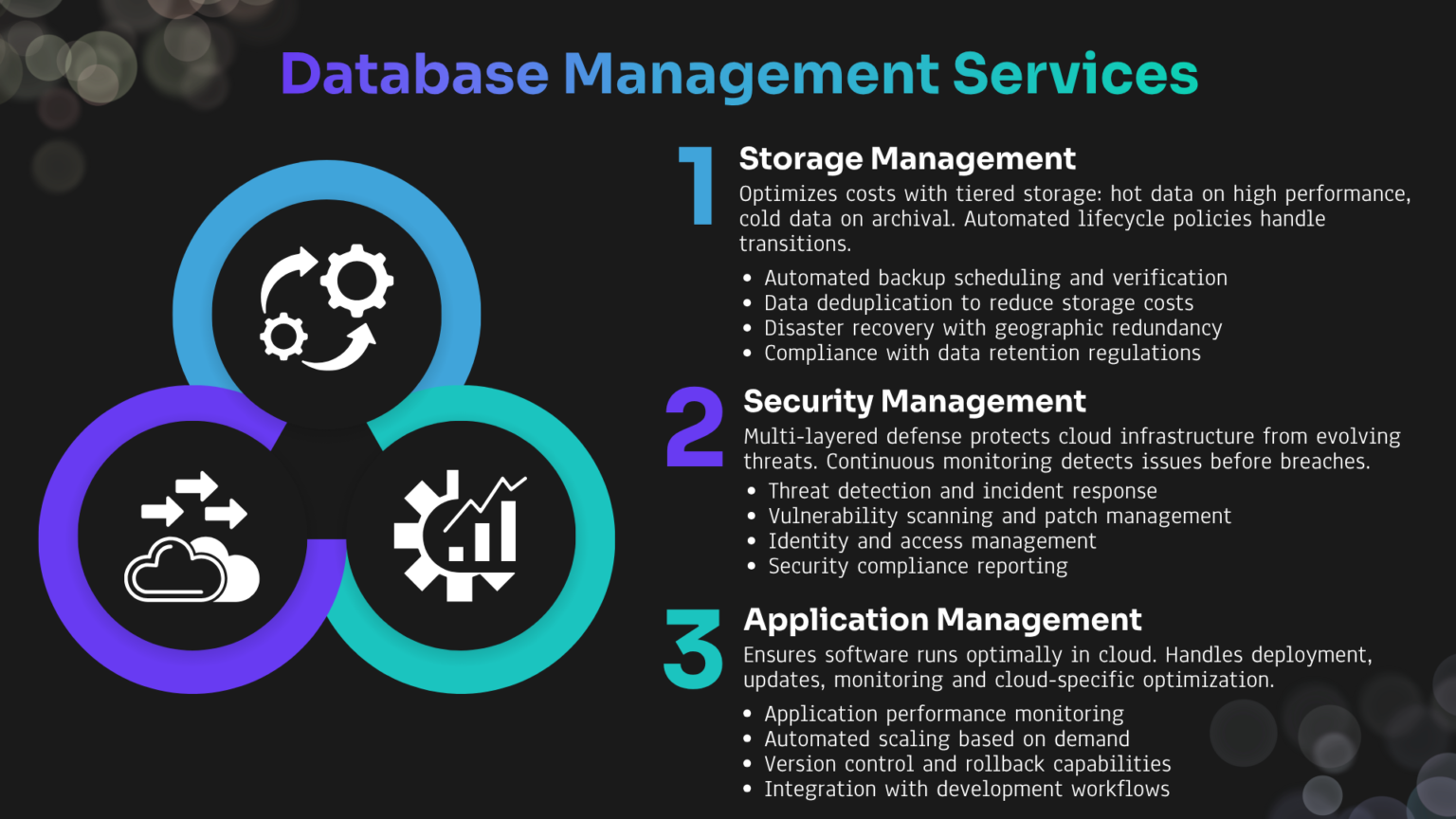
Strict access controls ensure only authorized users reach sensitive systems and data. Providers implement role-based access control that grants minimum necessary permissions.
- Multi-factor authentication for all user access
- Privileged access management for administrative functions
- Regular access reviews and permission audits
- Automated deprovisioning when access expires
Data Protection

Comprehensive data security safeguards information throughout its lifecycle. Encryption protects data at rest and in transit using industry-standard algorithms.
- Encryption for storage and database systems
- TLS ensures secure data transmission by maintaining integrity, confidentiality, and authenticity
- Key management with hardware security modules
- Data loss prevention monitoring strategies and techniques
Threat Detection

Continuous monitoring identifies suspicious activity requiring investigation. Security information and event management systems aggregate logs from across infrastructure.
- Real-time threat intelligence integration system
- Behavioral analysis for effective anomaly detection
- Automated incident response workflows process
- Regular penetration testing and security assessments