

Cloud Strategy & Consultation:
Expert-Led Guidance

Modern organizations face unprecedented technology challenges. Cloud adoption continues accelerating across industries, yet many businesses struggle to maximize their cloud investments. Without a clear strategic framework, companies risk overspending on underutilized resources or falling behind competitors who scale more efficiently.Strategic planning makes the difference between successful cloud transformation and costly missteps. The right consulting partner helps navigate complex decisions about infrastructure, security, and operational models.
From selecting the optimal cloud architecture to ensuring seamless integration across teams, every decision carries long-term implications for growth and resilience.Inventiv Cloud delivers comprehensive cloud strategy consulting that aligns technology with business goals. Our approach combines technical expertise with industry knowledge to create roadmaps that drive measurable value. With a focus on long-term partnership rather than one-time engagements, we help organizations build the agility needed to adapt as technology and business needs evolve.
Ready to Transform Your Cloud Strategy?
Schedule a free consultation with our experts to discuss your cloud strategy consulting needs and discover how we can help your business grow. During this no-obligation session, we'll assess your current infrastructure and identify key opportunities for optimization.Our team is ready to provide the insights you need to move forward with confidence.
Understanding Cloud Strategy & Consulting Services
Cloud strategy consulting provides organizations with expert guidance to navigate digital transformation. This service encompasses planning, implementation, and optimization of cloud infrastructure to meet specific business objectives. By leveraging cloud technology, businesses can achieve improved operational efficiency, reduce costs, and enhance data security. Additionally, strategic cloud consulting fosters innovation, enabling organizations to respond swiftly to market changes and customer demands.This service is essential for organizations aiming to balance agility with risk management, ensuring they remain competitive in a rapidly evolving digital landscape. Strategic cloud consulting addresses critical business needs. Organizations require frameworks that balance innovation with security, flexibility with control, and speed with stability.
Core Components of Cloud Strategy
Effective cloud strategy encompasses multiple critical dimensions that organizations must address for successful digital transformation. Technology choices, including platform selection and cloud architecture design, lay the foundation for scalable, future-ready operations. Robust security frameworks and compliance measures protect sensitive data while ensuring regulatory adherence across cloud environments.Meanwhile, strategic cost management and cloud cost optimization help businesses maximize ROI and avoid unnecessary spend, and streamlined operational processes ensure consistent performance, reliability, and business continuity.
- Infrastructure assessment and planning capabilities
- Migration roadmap development and execution
- Security and compliance framework design
- Cost optimization and financial management
- Operational model transformation
- Technology stack selection and integration

Why Organizations Need Cloud Consulting ?
Business leaders face complex decisions about cloud adoption. The market offers numerous platforms, deployment models, and service configurations. Expert guidance helps avoid costly mistakes.Cloud consulting delivers value through specialized knowledge. Consultants bring experience from multiple implementations across industries. This expertise accelerates decision-making and reduces risks associated with cloud transformation.
Strategic Planning

Organizations gain clarity on cloud adoption paths. Consulting services help define objectives, timeline expectations, and resource requirements for successful transformation.
Risk Mitigation

Expert consultants identify potential challenges before they impact operations. Proactive risk management protects investments & maintains business continuity all over migration processes.
Cost Optimization

Strategic consulting uncovers opportunities to reduce cloud spending. Organizations achieve better resource utilization and eliminate unnecessary expenses through expert analysis.
Cloud Strategy Development Process
Developing an effective cloud strategy requires systematic analysis and planning. The process begins with comprehensive assessment of current infrastructure, business requirements, and organizational capabilities. This foundational step helps identify gaps, redundancies, and opportunities that inform every subsequent decision. From there, organizations can prioritize initiatives based on business impact, technical feasibility, and available resources, ensuring the resulting strategy is both realistic and aligned with long-term goals.
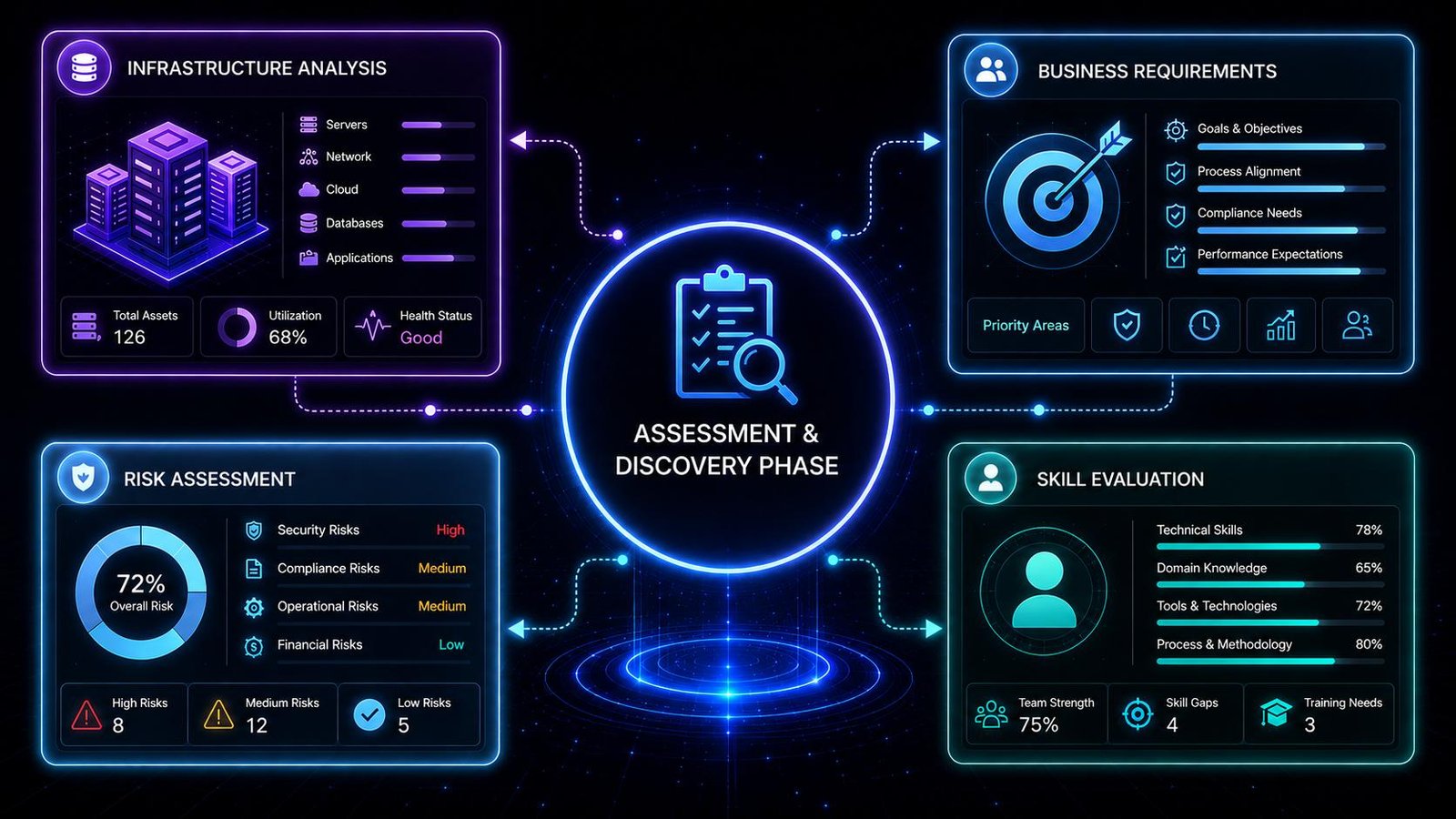
Assessment and Discovery Phase
Understanding current state establishes the foundation for transformation. Consultants analyze existing technology infrastructure, applications, data architecture, and operational processes. This discovery phase identifies opportunities and constraints. Organizations gain visibility into technical debt, security vulnerabilities, and performance bottlenecks that impact cloud readiness.
- Infrastructure Analysis: Detailed evaluation of current systems reveals migration complexity and resource requirements.
- Business Requirements: Aligning technology capabilities with business objectives ensures strategic value delivery.
- Risk Assessment: Identifying potential challenges enables proactive mitigation planning.
Skills Evaluation: Understanding team capabilities shapes training needs and support requirements.
Strategy Formulation
Assessment insights inform strategic recommendations. Consultants develop customized roadmaps that address specific organizational needs while leveraging cloud capabilities effectively. These roadmaps typically outline phased implementation timelines, allowing businesses to realize value incrementally while minimizing disruption to ongoing operations.Strategy formulation balances multiple considerations. Technology choices, deployment models, security frameworks, and operational processes all align with business priorities. Throughout this process, consultants also account for scalability and future growth, ensuring the strategy remains adaptable as business needs and technology capabilities continue to evolve.
Cloud Migration Strategy and Execution
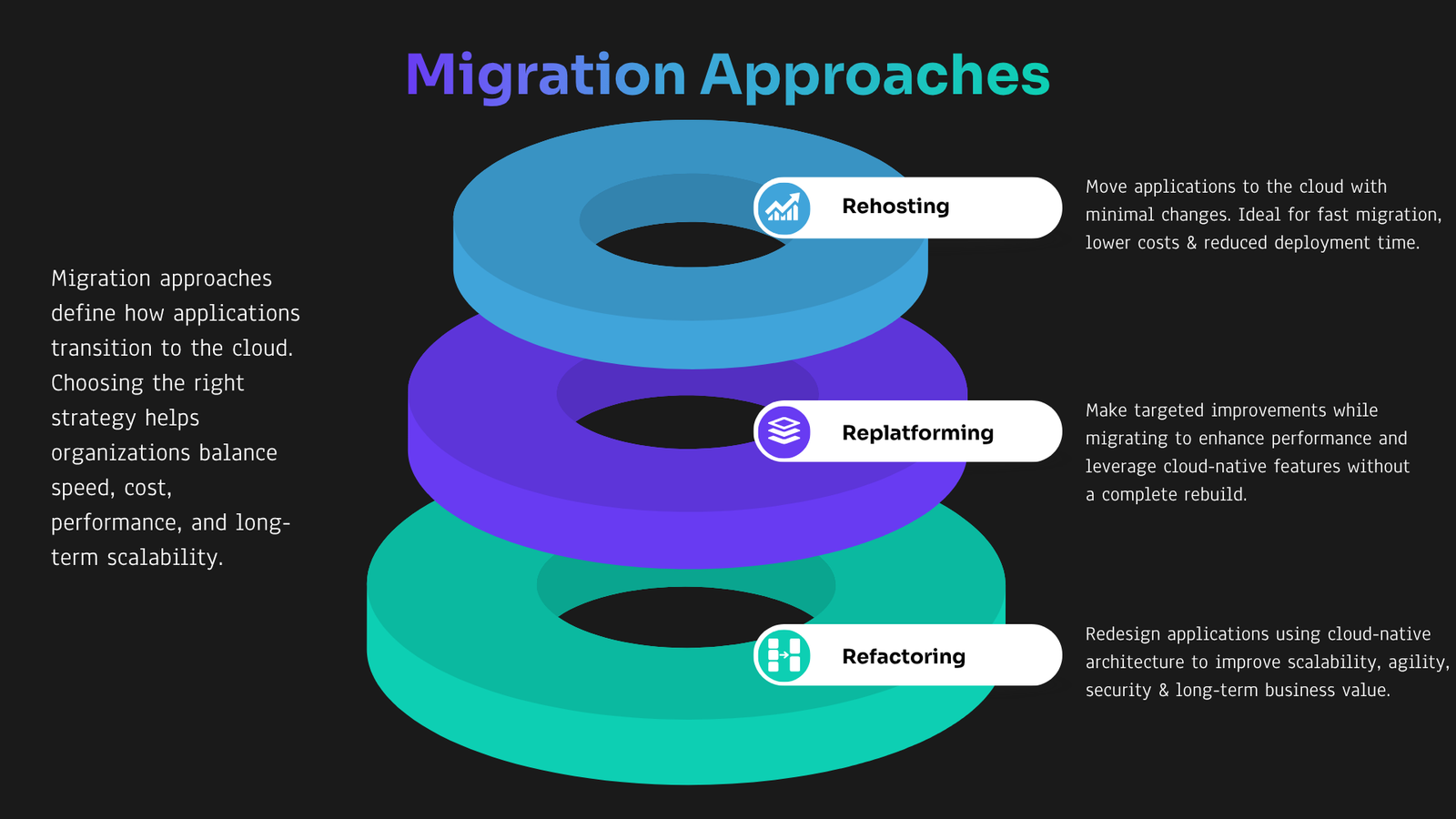
Cloud migration represents a critical transformation phase. Organizations move applications, data, and infrastructure from on-premises environments to cloud platforms. Strategic planning ensures smooth transitions with minimal disruption.Migration approaches vary based on application characteristics and business requirements. The right strategy balances speed, risk, and transformation objectives.
Migration Planning Essentials
Successful migration requires detailed planning across multiple dimensions. Technical preparation, stakeholder communication, and contingency planning all contribute to positive outcomes.
- App dependency mapping
- Data classification
- Network planning
- Security setup
- Testing config
- Rollback plans
Execution Best Practices
Migration execution demands careful coordination and monitoring. Phased approaches reduce risk while maintaining business operations throughout the transition period.
- Pilot with non-critical apps
- Set performance baselines
- Monitor during cutover
- Run parallel operations
- Document lessons learned
- Optimize post-migration
Hybrid Cloud and Multi-Cloud Strategies
Hybrid cloud environments combine public cloud services with private infrastructure. This model provides flexibility to optimize workload placement based on performance, security, and cost requirements. Similarly, multi-cloud strategies involve the use of multiple cloud services from different providers, allowing organizations to avoid vendor lock-in and leverage the best features of each platform.
Hybrid Cloud Benefits
Organizations adopt hybrid cloud to balance control and scalability. Sensitive workloads remain on-premises while variable demand applications leverage public cloud elasticity.Hybrid cloud architecture empowers organizations to achieve the ideal balance between data security and operational agility across their IT ecosystem. Enterprises can leverage private cloud infrastructure for sensitive workloads requiring strict regulatory compliance, while simultaneously harnessing public cloud scalability to support dynamic, high-growth applications.
- Balance control and scalability for sensitive workloads.
- Leverage public cloud elasticity for variable demand applications.
- Enhanced flexibility for workload mobility between environments.
- Cost optimization through strategic workload placement.
- Compliance control with data residency management.


Multi-Cloud Approach
Multi-Cloud approach introduces complexity requiring sophisticated management. Cloud consulting helps navigate integration challenges and maintain operational efficiency across platforms.Adopting a multi-cloud approach offers organizations greater flexibility and vendor independence, but it also introduces significant management complexity that requires specialized expertise. Expert cloud consulting services help businesses navigate cross-platform integration challenges, standardize governance policies, and implement unified monitoring across diverse cloud environments.
- Service selection based on provider strengths and capabilities
- Data integration and synchronization between platforms
- Unified security and compliance management
- Cross-platform monitoring and observability
- Cost tracking and optimization across providers
Cloud Security and Compliance Strategy
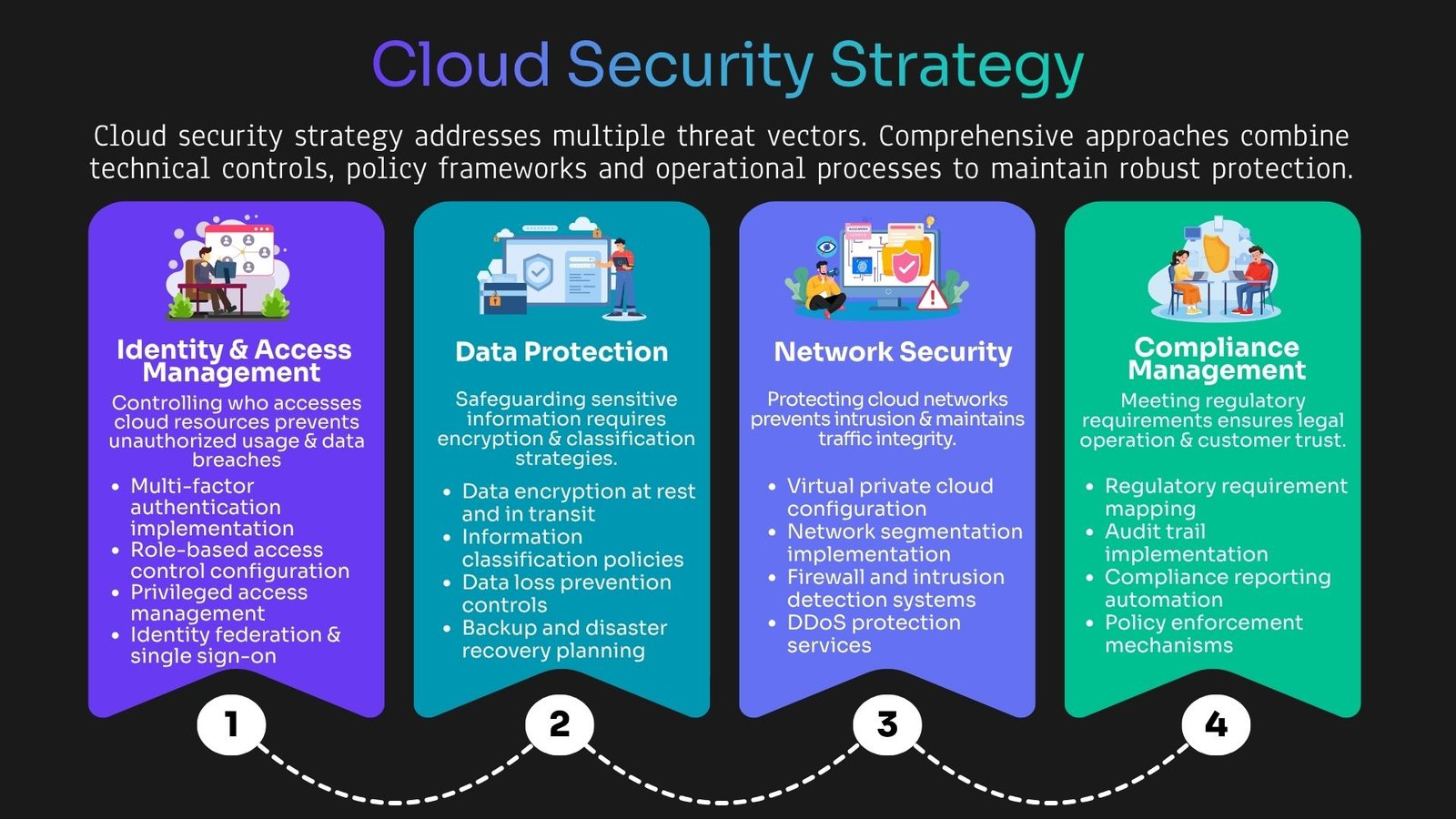
Security represents a fundamental component of cloud strategy. Organizations must protect data, applications, and infrastructure while maintaining compliance with regulatory requirements.Cloud security strategy addresses multiple threat vectors, from data breaches and unauthorized access to misconfigurations and insider risks. Comprehensive approaches combine technical controls, policy frameworks, and operational processes to maintain robust protection across cloud environments
Cloud Cost Optimization Strategies
Cloud costs require active management to prevent overspending. Organizations often experience budget overruns without proper governance and optimization strategies. Common culprits include unused or underutilized resources, oversized instances, and a lack of visibility into spending across departments. Implementing cloud cost optimization practices, such as rightsizing workloads and leveraging reserved instances, can significantly reduce unnecessary expenditure.
Common Cost Challenges
Cloud spending frequently exceeds expectations. Unused resources, inefficient configurations, and lack of visibility contribute to unnecessary costs.
- Idle resources wasting budget
- Oversized instances causing inefficiency
- High data transfer costs
- Poor capacity planning
- Inadequate tagging for cost tracking
- Lack of resource lifecycle management
- Unoptimized data retention policies
Optimization Techniques
Cost optimization requires continuous analysis and adjustment. Organizations implement multiple strategies to maintain efficiency as cloud usage evolves.
- Matching instance sizes to actual workload requirements eliminates waste.
- Committing to predictable usage reduces costs through discounted pricing.
- Managing data lifecycle reduces storage expenses significantly.
- Detailed tracking enables informed decision-making about cloud spending.
Cloud Technology Capabilities and Integration
Cloud platforms offer extensive technology capabilities. Organizations leverage these services to build sophisticated solutions without managing underlying infrastructure complexity. From serverless computing and managed databases to AI and machine learning services, cloud providers enable teams to innovate faster while reducing operational burden. This shift allows businesses to focus resources on core product development and customer experience rather than infrastructure maintenance.
Platform Services
Cloud providers deliver managed services across multiple categories. These capabilities accelerate development while reducing operational overhead for common technology requirements.Leading cloud providers offer a comprehensive portfolio of managed services spanning compute, storage, networking, and database solutions. These fully managed services eliminate the need for businesses to handle routine maintenance, patching, and infrastructure provisioning, allowing development teams to focus on building innovative applications instead.
- Data services: Managed database solutions reduce administrative tasks, allowing organizations to concentrate on data usage.
- Analytics Platforms: Cloud analytics efficiently handle large datasets, making advanced analytics accessible.
- Integration Services: Managed integration platforms streamline connections between applications and data sources.


DevOps and Automation
Cloud platforms enable DevOps practices through automation capabilities. Infrastructure as code, continuous integration, and deployment pipelines accelerate software delivery.Modern cloud platforms serve as the foundation for effective DevOps implementation by providing robust automation capabilities across the entire software development lifecycle. Infrastructure as code enables teams to provision.
- Infrastructure Automation: Code-based infrastructure management ensures consistency and repeatability.
- CI/CD Pipelines: Automated build and deployment processes accelerate software releases.
- Monitoring Solutions: Comprehensive observability reveals system behavior and performance.
- Container Orchestration: Managed container platforms simplify microservices deployment.
Cloud Strategy Across Industries
Different industries face unique cloud adoption challenges and opportunities. Regulatory requirements, data sensitivity, and operational characteristics shape cloud strategies for specific sectors. For example, healthcare organizations must prioritize HIPAA compliance and patient data protection, while financial services firms navigate strict data residency and audit requirements. Manufacturing and retail sectors often focus on supply chain visibility and real-time analytics to optimize operations at scale.
Healthcare Cloud Strategies
Healthcare organizations balance innovation with strict compliance requirements. Cloud technology enables better patient care through data analytics while maintaining HIPAA compliance and data security. Electronic health records, telemedicine platforms, and medical imaging systems migrate to cloud infrastructure. Organizations gain scalability and accessibility while implementing robust security controls.
Financial Services Cloud Adoption
Financial institutions prioritize security, compliance, and reliability. Cloud strategies address regulatory requirements while enabling digital banking experiences and real-time transaction processing. Risk management and data sovereignty concerns shape financial services cloud approaches. Hybrid cloud models often serve these organizations well, maintaining sensitive systems on-premises while leveraging public cloud for customer-facing applications.
Retail and E-Commerce
Retail organizations leverage cloud elasticity for seasonal demand fluctuations. E-commerce platforms scale automatically during peak shopping periods without over-provisioning infrastructure year-round. Additionally, cloud technology enables retailers to enhance customer engagement through personalized marketing and improved inventory management, ensuring that they meet consumer needs efficiently and effectively.
Manufacturing and Industrial
Manufacturing organizations adopt cloud for Industrial IoT applications. Sensor data from production equipment flows to cloud analytics platforms, enabling predictive maintenance and process optimization. Supply chain visibility improves through cloud-based collaboration platforms. Partners share information securely while maintaining data privacy and competitive advantages.